
How To Sing Better Instantly
Imagine being able to instantly and effortlessly improve your singing voice. Well, you don’t have to imagine anymore because in this article, you will discover powerful techniques that will help you sing better right away.
Whether you’re a beginner or an experienced singer, these tips and tricks are designed to enhance your vocal performance and take it to the next level. Get ready to unleash your full potential and wow your audience with your newfound singing skills. Get ready to sing better instantly!

Warm up your voice
Breathing exercises
Before you start singing, it’s essential to warm up your voice, just like you would warm up your muscles before a workout. Breathing exercises are a great way to prepare your vocal cords and diaphragm for singing.
You can start by taking a deep breath in through your nose and then exhaling slowly through your mouth. This helps to relax your body and open up your airways. Repeat this a few times to get your breath flowing.
Next, try some diaphragmatic breathing exercises. Place one hand on your chest and the other hand on your diaphragm, which is located just below your ribcage. Take a deep breath in, allowing your diaphragm to expand and your chest to remain still. As you exhale, feel the gentle contraction of your diaphragm. This type of breathing helps to control your airflow and support your voice.
Vocal exercises
Now that you’ve warmed up your breathing, it’s time to do some vocal exercises. These exercises help to strengthen your vocal muscles and improve your overall singing ability.
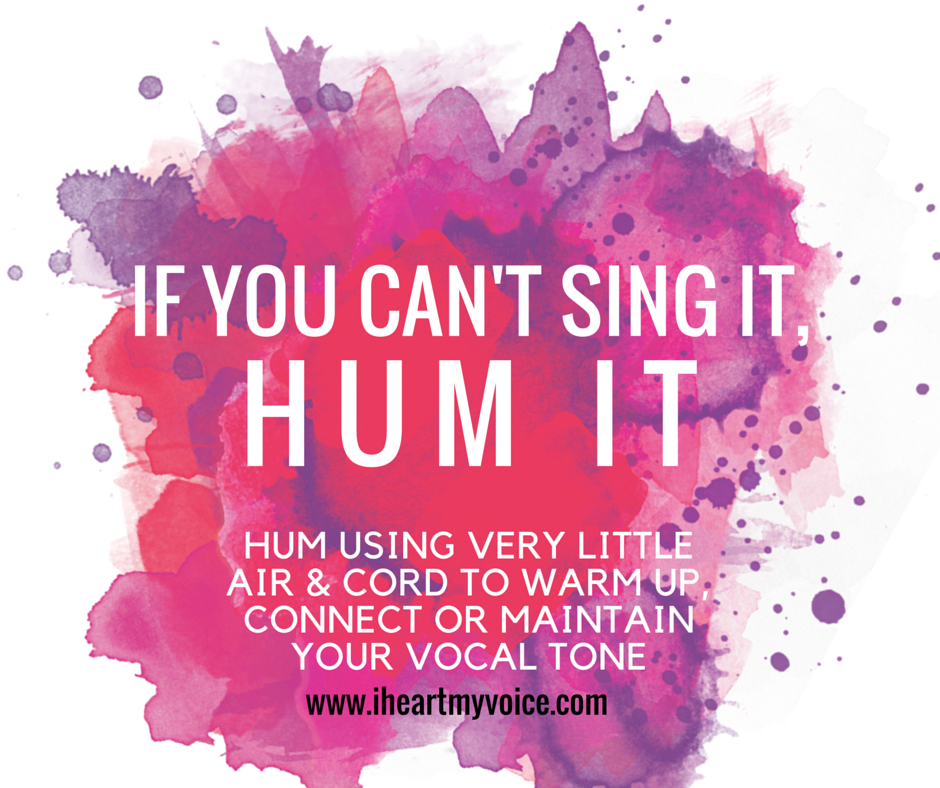
Start by gently humming from the lowest note you can comfortably sing to the highest note you can comfortably sing. Focus on maintaining a consistent tone and gradually increasing the volume as you progress.
Next, try some lip trills or “brr” sounds. This exercise helps to loosen up your lips and tongue while also building breath control. Begin by making a buzzing sound with your lips and gradually change the pitch while maintaining the vibration.
Another great exercise is called the siren. Start from a low note and slowly slide up to a high note, like a siren. Then, slide back down to the low note. This exercise helps to improve your vocal flexibility and range.
Improve your posture
Stand tall
Your posture plays a crucial role in how well you sing. Standing tall allows for better breath control and helps to align your body for optimal vocal production. To improve your posture, imagine a string pulling you up from the top of your head. Keep your shoulders relaxed and your spine straight. Avoid slouching or leaning forward, as this can restrict your airflow.
Relax your shoulders
Tension in your shoulders can negatively impact your singing. It can restrict your breath and create strain in your upper body. Before you start singing, take a moment to relax your shoulders. Roll them back and down, releasing any tension. This will help create a more open space for your breath to flow freely.
Lengthen your neck
Your neck alignment is also crucial for good singing posture. Imagine lengthening the back of your neck, as if someone is gently pulling your head upwards. Avoid jutting your chin forward or tucking it into your chest. A relaxed and elongated neck allows for better resonance and projection.

Control your breathing
Diaphragmatic breathing
Controlling your breath is essential for singing with power and consistency. Diaphragmatic breathing, also known as belly breathing, is the key to achieving this control.
To practice diaphragmatic breathing, lie down on the floor or sit up straight in a chair with your back supported. Place one hand on your chest and the other on your belly. As you inhale, focus on expanding your belly, allowing your diaphragm to lower and create space for your lungs to fill with air. As you exhale, feel your belly sinking back in. This type of breathing enables steady and controlled airflow, providing you with greater vocal control.
Inhale and exhale correctly
In addition to diaphragmatic breathing, it’s essential to focus on how you inhale and exhale during singing. When you inhale, imagine filling your lungs from the bottom up, taking in a smooth and controlled breath. Avoid shallow or gasping breaths, as they can lead to tension and inconsistent sound.
When exhaling, aim for a steady and controlled release of air. Avoid forcefully pushing out the breath, as it can strain your vocal cords. Instead, allow the breath to gently flow out, supporting your sound with the muscles in your abdomen and diaphragm.
Use proper vocal techniques.
Practice proper vocal placement.
Proper vocal placement involves resonating the sound in the optimal areas of your vocal tract. This allows for a clear and projective tone.
To find your ideal vocal placement, try practicing some vocal exercises while placing your hand gently on your chest and cheekbones. Focus on feeling the vibrations in these areas—experiment with adjusting your resonance by slightly altering the shape of your mouth and throat. When you find the sweet spot, you’ll notice a more resonant and controlled sound.
Enunciate clearly
Clear enunciation is essential for conveying the lyrics of a song effectively. Practice articulating each word and syllable crisply and distinctly. Please pay attention to consonants and ensure they are fully pronounced without being harsh or strained.
To practice clear enunciation, try singing scales or simple vocal exercises while exaggerating each word. Over time, this will help you develop a natural clarity in your singing and improve your overall diction.
Avoid tension in your throat.
Tension in your throat can lead to a strained and restricted sound. It’s important to sing with a relaxed throat to achieve a precise and effortless tone.
To avoid tension, start by gently yawning or sighing to release any tightness in your throat. As you sing, envision the sound resonating in the space behind your nose and forehead, rather than in your throat. This helps to create a more open and resonant sound, free from unnecessary strain.
Practice correct vowel sounds.
Open your mouth wide.r
Properly shaping your vowel sounds is essential for precise and resonant singing. To achieve this, open your mouth wider when singing vowels. This allows for a more open and resonant sound, as well as better projection.
Imagine biting into a big, juicy apple or saying “ah” like you’re at the dentist. By opening your mouth wider, you create more space in your throat for the sound to resonate and project.
Shape the vowel sounds correctly.
Each vowel has a specific shape that you need to replicate to achieve the correct sound. Practice shaping your vowels by exaggerating the movements of your lips, tongue, and jaw.
For example, when singing the vowel “ee,” your lips should be slightly rounded and your tongue should be pressed against the back of your bottom teeth. When singing “ah,” your mouth should be wide open, with your tongue relaxed and low in your mouth. Shaping your vowels correctly helps to produce a clear and accurate tone.
Avoid nasality
Nasal singing can be a common problem for many singers. To avoid nasality, focus on resonating your sound in your mouth and throat, rather than in your nose.
Practice singing with your hand gently pressing against your nose. This will help you become more aware of any nasal vibrations and guide you to adjust your resonance. By directing the sound away from your nasal cavity, you’ll achieve a more pleasant and balanced tone.
Find your vocal range.
Identify your vocal registers.
Vocal registers are different parts of your vocal range characterized by their unique sound quality and ease of production. Identifying your vocal registers can help you understand your vocal range better and sing with more control.
The three central vocal registers are chest voice, head voice, and mixed voice. Chest voice is the lower register, head voice is the higher register, and mixed voice bridges the gap between the two.
To identify your registers, start by singing a descending scale starting from your highest comfortable note. Notice where your voice naturally transitions into a lighter and more heady sound (head voice) and where it transitions into a fuller and richer sound (chest voice). These transitions are known as vocal breaks and indicate the shifts between your registers.
Expand your range through exercises.
Once you’ve identified your registers, you can begin expanding your vocal range through targeted exercises.
To strengthen your chest voice, practice singing scales, arpeggios, and exercises that explore the lower part of your range. Focus on maintaining a connected and resonant sound throughout.
To develop your head voice, work on exercises that gently transition from your chest voice to your head voice. Start by singing a comfortable note in your chest voice and gradually glide up to a higher note in your head voice, maintaining a smooth and controlled sound.

Work on your breath control.
Develop your lung capacity.
Strong breath control is crucial for sustaining notes and phrases while singing. Developing your lung capacity allows you to hold longer notes and project your voice with power.
To improve your lung capacity, try practicing some breathing exercises regularly. Take deep breaths and hold them for as long as possible before exhaling slowly. Gradually increase the duration of each breath hold as your lung capacity improves.
Another effective exercise is to blow bubbles through a straw into a glass of water. This helps strengthen your diaphragm and encourages controlled, sustained airflow.
Master breath support
Breath support is the ability to control the release of air through your vocal cords. It helps you maintain consistent volume and sustain notes.
To master breath support, focus on engaging your core muscles, such as your abdominal muscles. Imagine them gently hugging around your diaphragm as you sing. As you exhale, consciously release the air gradually, rather than letting it all out at once. This will help you maintain a steady and controlled sound throughout your phrases.
Increase your vocal power.
Strengthen your vocal muscles.
Just like any other muscle in your body, your vocal muscles need regular exercise to become stronger. Strengthening your vocal muscles allows you to sing with more power, endurance, and control.
To strengthen your vocal muscles, practice singing exercises that gradually increase in intensity and volume. This can include singing scales with added vocalization, such as sirens or dynamic leaps. It’s essential to warm up properly before engaging in these exercises to prevent strain or injury.
Sing with energy and conviction.
Vocal power is not just about physical strength but also about the emotional energy and conviction you put into your singing. To increase your vocal power, connect with the lyrics and the song’s message.
Use your body language, facial expressions, and gestures to enhance your performance and convey the emotions behind the lyrics. Singing with energy and conviction will not only make your voice more powerful but also captivate your audience.
Find the correct key for your voice
Experiment with different keys
Finding the correct key for your voice is crucial for comfortable and practical singing. Experiment with different keys to discover which one suits your range and vocal quality the best.
Try singing a song in different keys, starting from a lower key and gradually moving up until you find a key that allows you to sing the melody effortlessly and with good tone quality. A key that is too high or too low can strain your voice and lead to vocal fatigue.
Choose a key that suits your range.
Ideally, choose a key that allows you to access both your chest voice and head voice comfortably. Consider the highest and lowest notes of the song and ensure they fall within your vocal range without strain.
Remember, every singer’s range is unique, and what works for one singer may not work for another. Don’t be afraid to transpose songs to accommodate your vocal range and make them more comfortable to perform.
Develop your ear for pitch.
Practice vocal exercises with a piano or guitar.
Developing your ear for pitch is essential for singing in tune. One effective way to improve your pitch is to practice vocal exercises alongside a musical instrument such as a piano or guitar.
Start by playing a note on the piano or guitar and try to match that pitch with your voice. Gradually move up and down the musical scale, focusing on accurately reproducing each note. Over time, your ear for pitch will become more trained, and you’ll be able to sing in tune more consistently.
Listen to professional singers and match their pitch
Listening to professional singers is a great way to train your ear for pitch. Choose songs by renowned singers in your genre and listen closely to their performances.
Try to imitate their pitch, tone, and overall delivery. Please pay attention to the nuances of their vocal technique and how they maintain their pitch throughout the song. This not only improves your pitch accuracy but also helps you develop your unique singing style.
By following these steps and consistently practicing your vocal techniques, you can instantly improve your singing. Remember, singing is a skill that requires patience, practice, and above all, confidence in your unique voice. So warm up your voice, embrace proper techniques, and let your mighty voice soar!
RELATED TOPICS ABOUT How To Sing Better Instantly:
How to Improve Singing Instantly,
Instant Vocal Improvement Tips,
Sing Better Right Now,
Quick Singing Improvement Techniques,
Immediate Singing Hacks,
Fast Singing Improvement,
How to Sing Better Today,
How to Warm Up Your Voice Quickly,
How to Hit High Notes Instantly,
How to Sound Better when Singing,
How to Control Your Voice While Singing,
How to Sing Without Straining,
Breathing Techniques for Singers,
Vocal Techniques for Beginners,
Vocal Exercises for Instant Results,
Pitch Control Exercises,
Vocal Resonance Tips,
Enunciation in Singing,
Singing Posture Correction,
Vocal Range Expansion,
How to Sing with Confidence,
Why Does My Singing Sound Bad,
Fix Flat Singing,
Fix Pitchy Vocals,
How to Stop Cracking While Singing,
Overcoming Vocal Fatigue,
Singing with a Sore Throat,
Singing Tips for Beginners Youtube,
Step-by-step Singing Guide,
Fast Vocal Improvement Tutorial,
Singing Improvement Without Lessons,
5-minute Singing Tips,
Diy Vocal Training at Home,
How to Sing Better Instantly Without Lessons,
How to Improve Your Voice for Singing in One Day,
How to Sing Better with No Experience,
How to Sing Better for Karaoke Night,
How to Sing Clearer and Louder Instantly
==========
Content 10/10/G


