Whether you’re an aspiring singer or just looking to enhance your vocal abilities, this article provides you with valuable tips on how to improve your singing. From warm-up exercises to proper breathing techniques, you’ll discover practical advice that will help you develop your voice and reach new levels of proficiency. So get ready to unlock your true vocal potential and take your singing abilities to the next level!

Breathing Techniques
Diaphragmatic breathing
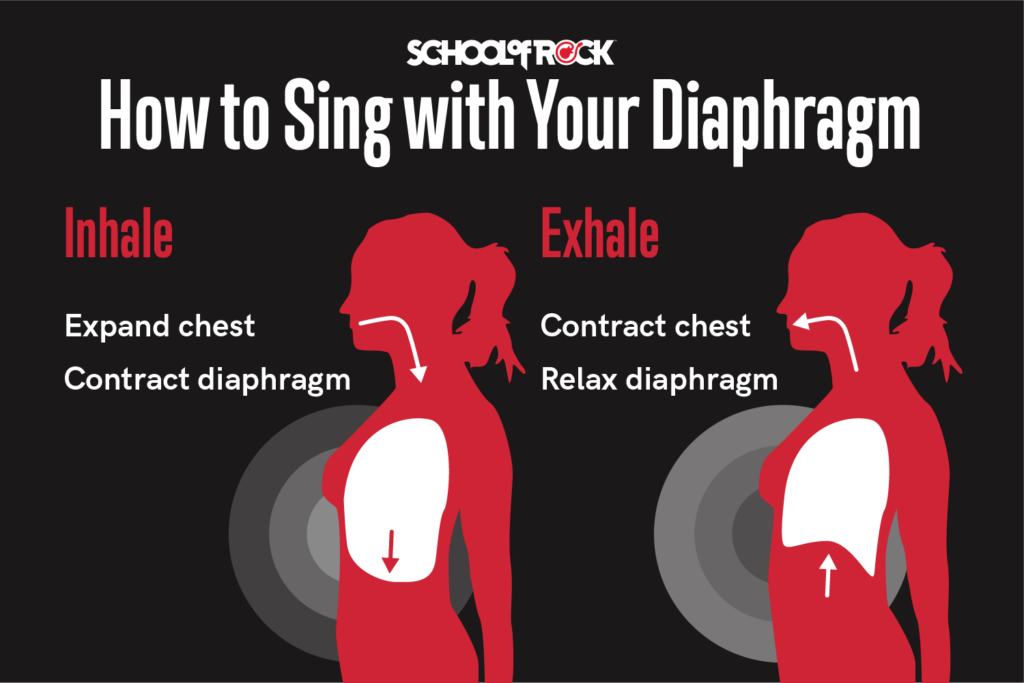
One of the most important aspects of singing is proper breathing technique. Diaphragmatic breathing, also known as belly breathing, is a technique that helps you maximize the amount of air you take in and releases tension in your body. To practice diaphragmatic breathing, sit or lie down comfortably and place one hand on your abdomen. As you inhale deeply, imagine filling your belly with air, allowing it to rise and expand. Then, exhale slowly, allowing your belly to fall. By engaging your diaphragm, you can improve your breath control and support your vocal sound.
Rib cage expansion
In addition to diaphragmatic breathing, rib cage expansion exercises can help you develop greater breath capacity and control. Stand with your feet shoulder-width apart and your hands resting lightly on your rib cage. As you inhale, imagine expanding your ribs out to the sides, feeling them lift and open. As you exhale, release the air slowly and let your ribs gently return to their starting position. Practicing rib cage expansion exercises will help you improve your breath control and achieve a fuller, more supported vocal sound.
Supporting the breath
To further enhance your singing, it is essential to learn how to properly support your breath. When you sing, you should feel a sense of engagement in your core muscles, including your abdominal muscles, lower back, and pelvic floor. This support provides stability and control to your voice. To practice breath support, imagine that you are filling a balloon in your stomach as you inhale. As you sing, focus on maintaining that balloon-like feeling by engaging your core muscles and gradually releasing the air. Working on your breath support will help you maintain consistent vocal tone and control throughout your singing.
Vocal Warm-Up Exercises
Lip trills
Lip trills are a great way to warm up your voice and loosen up your facial muscles. To do a lip trill, lightly press your lips together and blow air through them, creating a buzzing sound. Start with a gentle and slow trill, gradually increasing the speed and range. Lip trills help to relax your vocal cords and improve their flexibility, allowing for smoother and more controlled vocalization.
Sirens
Sirens are another effective vocal warm-up exercise that helps to stretch and warm up your vocal cords. Begin at the lower end of your vocal range and slide your voice smoothly up to the highest note you can comfortably reach, and then back down again. Remember to keep the movement smooth and controlled without straining. Sirens help to increase the flexibility of your voice and expand your vocal range.
Tongue twisters
Tongue twisters are a fun and challenging way to warm up your articulation and diction skills. Start with simple tongue twisters and gradually increase the difficulty as you become more comfortable. Repeat tongue twisters that focus on specific sounds or phonetic combinations to improve your clarity and precision when singing.

Posture and Alignment
Standing tall
Maintaining good posture is crucial for singers to optimize breath control and vocal resonance. Stand with your feet hip-width apart, loosen your knees, and imagine a string pulling you up from the top of your head. Align your spine in a neutral position and relax your shoulders. Standing tall helps open up your chest, allowing for better lung capacity and vocal projection.
Relaxing the shoulders
Tension in your shoulders can restrict your breath and hinder your vocal performance. Practice relaxing your shoulders by rolling them back and down, and gently stretching and rotating them. Keep your shoulders relaxed and down as you sing, allowing your breath to flow freely and your voice to resonate without tension.
Engaging the core
Engaging your core muscles is essential for maintaining stability and control in your singing. Imagine drawing your navel towards your spine, engaging your abdominal muscles, and maintaining a slight tension in your lower back. This core engagement will provide a solid foundation for your breath support and help you maintain stability throughout your vocal range.
Pitch Accuracy
Tuning exercises
Developing pitch accuracy is crucial for singers to stay in tune during performances. Tuning exercises, such as matching pitches with an instrument or using pitch-matching apps, can help you train your ears to recognize and reproduce the correct pitch. Start with simple exercises and gradually work on more challenging melodies to improve your pitch accuracy.
Ear training
Ear training exercises involve recognizing and reproducing intervals, melodies, and harmonies by ear. Start by practicing basic intervals, such as ascending and descending scales, and gradually progress to more complex melodies and harmonies. Ear training will help you develop a better sense of pitch, tonality, and overall musicality.
Using a pitch pipe
A pitch pipe is a small handheld device that produces a fixed pitch when blown into. It can be a helpful tool for singers to ensure they are starting a song in the correct key or to check their pitch during practice sessions. By using a pitch pipe, you can train your ear to recognize different pitches and improve your overall pitch accuracy.

Vowel Modification
Open throat technique
Creating an open throat space while singing is essential for achieving a clear and resonant sound. To practice the open throat technique, yawn gently and pay attention to the feeling of openness in the back of your throat. As you sing, aim to maintain that open throat sensation, allowing your sound to resonate freely and eliminating any unnecessary tension.
Forming resonant vowels
Working on forming resonant vowels can greatly enhance your vocal tone and projection. Experiment with different mouth shapes and positions to find the most resonant sound for each vowel. Practice sustaining vowels and focus on achieving a rich, vibrant sound without straining.
Articulation and Diction
Tongue exercises
Clear articulation and diction are essential for conveying the lyrics of a song. Practice tongue exercises, such as repeating tongue-twisters or exercises that involve precise tongue movements, to improve your articulation and clarity. Focus on moving your tongue with precision and maintaining crisp enunciation.
Singing with clarity
In addition to tongue exercises, practice singing with clarity by paying attention to your pronunciation and emphasizing consonants. Articulate each word clearly and ensure that the audience can understand the lyrics even when singing in higher registers. Singing with clarity will enhance your communication as a singer and allow your audience to fully connect with your performance.
Range Expansion
Siren exercises
Siren exercises are not only great warm-ups but also effective for expanding your vocal range. Start from the bottom of your range and slide your voice smoothly up to the highest note you can comfortably reach, then back down again. Repeat this exercise, gradually extending your range as your voice becomes more flexible and resilient.
Gradual extension of vocal range
To further expand your vocal range, work on gradually extending your range by practicing specific exercises that target the upper and lower registers. Start by singing comfortably within your current range and gradually push your limits little by little. Over time, consistent practice will help you expand your vocal range and reach new heights with your singing.
Dynamic Control
Breath control
Dynamic control refers to the ability to vary the volume and intensity of your singing. Developing good breath control is crucial for achieving dynamic control. Practice exercises that focus on breath control, such as sustained note exercises, staccato exercises, and controlled releases of air. Improving your breath control will allow you to modulate your volume and dynamics with ease.
Crescendos and decrescendos
Crescendos and decrescendos involve gradually increasing or decreasing the intensity and volume of your singing. Practice exercises that involve sustained notes or phrases and gradually increase or decrease the volume as directed. Focus on maintaining a consistent and controlled breath flow throughout these dynamic changes.

Tone Quality
Resonance exercises
Resonance exercises help you achieve a richer, more resonant tone. Practice exercises that involve vocalizing on different resonant sounds, such as “ng” or “m,” to feel the vibrations and resonance in your head and chest cavities. By developing proper resonance, you can enhance the overall quality and depth of your vocal tone.
Vocal placement
Vocal placement refers to the positioning of your voice within your vocal apparatus. Experiment with different placements by imagining the sound coming from different areas, such as the front of the face, the back of the throat, or the top of the head. Find the placement that feels the most resonant and natural for your voice, and incorporate it into your singing for a more focused and vibrant tone.
Avoiding tension
Tension can negatively affect your tone quality and overall vocal performance. Pay attention to any areas of tension in your body, such as in your jaw, neck, or shoulders, and consciously release any unnecessary tension. Practice relaxation techniques, such as gentle stretches and massages, to alleviate tension and allow your voice to resonate freely.
Performance Practice
Working with a coach
Working with a vocal coach or instructor is invaluable for improving your singing skills. A coach can provide personalized guidance, identify areas for improvement, and help you develop a practice routine tailored to your specific needs. They can also offer valuable feedback and support during performances, helping you refine your technique and stage presence.
Recording and analyzing performances
Recording and analyzing your performances is an excellent way to identify areas for improvement and track your progress over time. Listen back to your recordings with a critical ear, paying attention to pitch accuracy, tone quality, diction, and overall performance. Take note of areas that require further refinement and adjust your practice regimen accordingly. Additionally, seek feedback from others, such as fellow musicians or trusted friends, to gain different perspectives on your performance.
Conclusion
Improving your singing requires consistent practice, proper technique, and a willingness to explore and refine your skills. By incorporating breathing techniques, vocal warm-up exercises, correct posture and alignment, pitch accuracy training, vowel modification, articulation and diction exercises, range expansion exercises, dynamic control techniques, tone quality enhancement exercises, and performance practice into your routine, you can enhance your singing abilities and reach new heights as a vocalist. Remember, progress takes time and patience, so enjoy the process and celebrate every step forward on your journey to becoming a better singer.


