If you’re an aspiring singer looking for ways to enhance your vocal performance, then improving your breathing technique is key. A strong and controlled breath not only helps you hit those high notes effortlessly but also improves the overall quality and power of your voice. In this article, we will explore some practical tips and exercises that will help you improve your breathing for singing, allowing you to unlock your true vocal potential. So, get ready to take a deep breath and let’s dive into the world of enhanced singing!
Proper Posture
Aligning the Spine
When it comes to singing, having proper posture is crucial for optimal breath control and vocal performance. Begin by aligning your spine by standing up straight or sitting upright. Imagine a string pulling the top of your head towards the ceiling, lengthening your spine. This alignment helps create a straight pathway for air to flow through your body, allowing for better breath support.
Relaxing the Shoulders
Tension in the shoulders can restrict your breathing and affect your vocal quality. Make sure to relax your shoulders and let them drop down naturally. Avoid tensing them up or hunching forward, as this can restrict your airway and limit your breath capacity. Keep your shoulders down and relaxed to allow for a full and unrestricted breath.
Engaging the Core
Engaging your core muscles is essential for supporting your breath while singing. To do this, imagine gently pulling your belly button towards your spine. This engages the muscles in your abdominal area and helps create a solid support system for your breath. It’s important to find a balance – don’t tense your muscles too much or push your breath too forcefully. Practice engaging your core to provide the necessary support for your singing.
Diaphragmatic Breathing
Understanding the Diaphragm
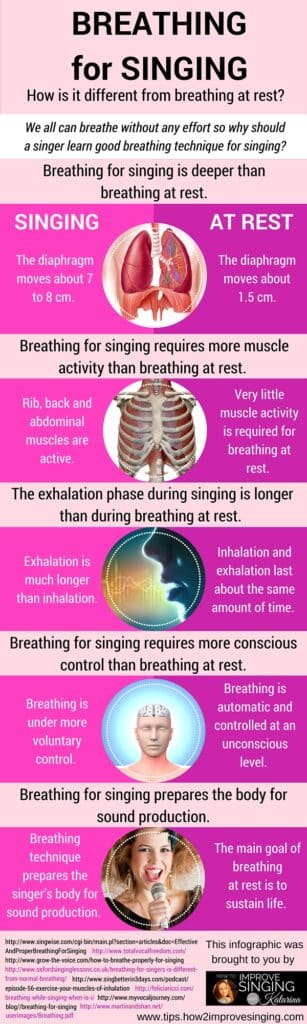
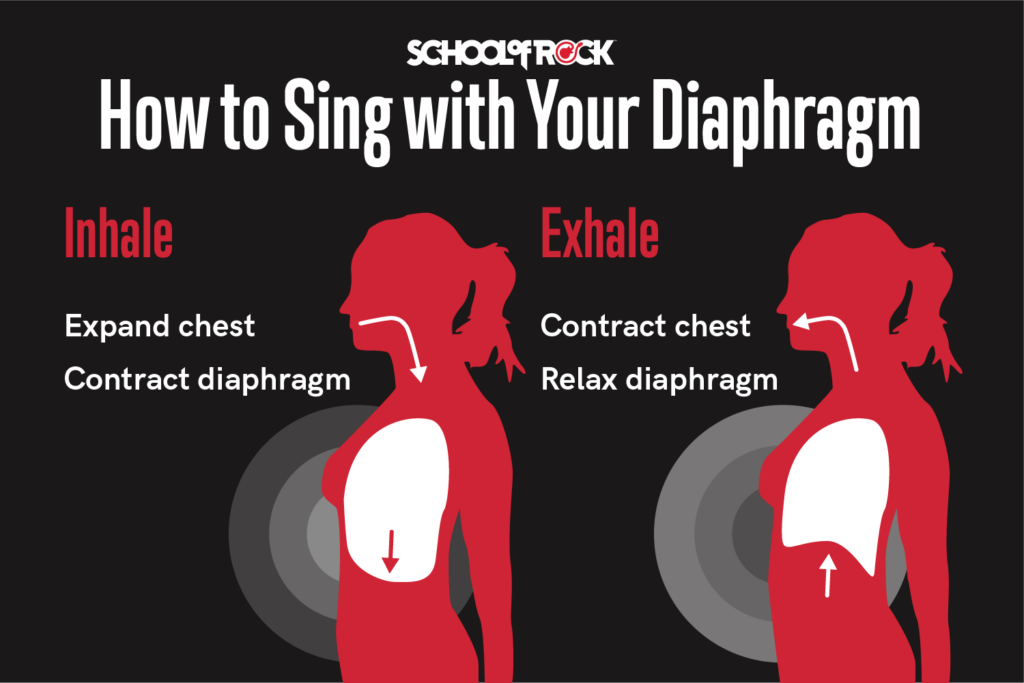
The diaphragm is a dome-shaped muscle located at the base of your lungs. It plays a significant role in breathing for singing. Understanding how the diaphragm works can help you improve your breath control and singing technique. When you inhale, your diaphragm contracts and moves downward, creating space for your lungs to expand and fill with air. This is known as diaphragmatic breathing or belly breathing.
Learning to Breathe Low
To improve your breathing for singing, it’s essential to learn how to breathe low. Start by placing one hand on your chest and the other on your abdomen. As you inhale, focus on feeling your abdomen rise and expand while keeping your chest as still as possible. This indicates that you are utilizing diaphragmatic breathing and drawing air deep into your lungs. Practice this technique regularly to develop the habit of breathing low.
Exercises for Diaphragmatic Breathing
There are various exercises you can incorporate into your practice routine to enhance your diaphragmatic breathing. One effective exercise is the “inhale-exhale” technique. Inhale slowly through your nose, allowing your abdomen to rise. Then exhale through your mouth, gently pushing out the air and feeling your abdomen deflate. Repeat this exercise several times, gradually increasing the length of your inhales and exhales. This exercise helps strengthen your diaphragm and improve your breath control.
Breathing Techniques
Lip Trills
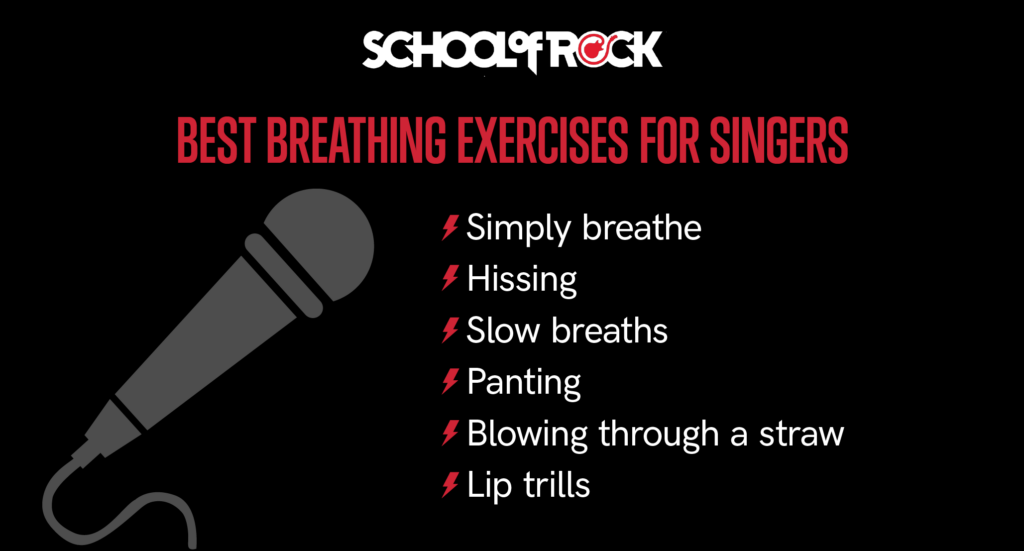
Lip trills are a fantastic breathing exercise that not only helps improve your breath control but also warms up your vocal cords. To perform lip trills, lightly press your lips together and exhale while making a buzzing sound. This technique allows air to flow smoothly and evenly, helping you establish breath support and control. Practice lip trills in various scales and pitches to enhance your vocal agility and control.
Sustained Notes
Another useful breathing technique for improving your breath control is sustaining notes. Choose a comfortable pitch, take a deep breath, and sing a sustained sound for as long as possible. Focus on maintaining a steady airflow and a consistent volume throughout the note. This exercise helps you develop breath control, endurance, and the ability to sustain long phrases without running out of breath.
Panting Breaths
Panting breaths are quick, shallow breaths that mimic the breath pattern of panting. This technique helps improve breath control and expands your lung capacity. Start by breathing in through your nose quickly, as if you were panting like a dog. Then exhale forcefully through your mouth, allowing the air to escape in short bursts. Repeat this exercise several times, gradually increasing the speed of your panting breaths. Panting breaths help build stamina and improve your ability to control your breath flow.
Sighs and Whispers
Sighs and whispers are excellent techniques for releasing tension and improving vocal control. Begin by taking a deep breath and then release the air slowly and audibly with a sigh. Allow your body to relax and gently let go of any tension. Alternatively, practice whispering while controlling your breath flow and maintaining a steady volume. These techniques help you become more aware of your breath and how it can be used for different vocal expressions.
Staccato Breaths
Staccato breaths are short, quick inhalations that mimic the breath pattern of staccato singing. This exercise helps improve your breath control, agility, and control over short musical phrases. Begin by taking short, punctuated breaths through your nose, emphasizing the quickness of each breath. Practice this exercise at different tempos and gradually increase the speed of your staccato breaths. Developing proficiency in staccato breaths enhances your ability to perform fast-paced vocal passages with precision.
Breath Control
Building Breath Support
Breath support is essential for vocalists to maintain control and produce a consistent sound. Building breath support involves training the muscles involved in inhalation and exhalation. Practice exercises that focus on engaging your core muscles, such as planks and sit-ups, to strengthen your diaphragm and abdominal muscles. Strengthening these muscles enhances your breath control and provides a solid foundation for your singing.
Expanding Lung Capacity
Expanding your lung capacity allows you to take in more air and sustain longer phrases. Practice deep breathing exercises where you aim to take in as much air as possible, filling your lungs to their fullest extent. As you exhale, focus on releasing the air gradually and evenly without tensing up or letting it escape too quickly. Gradually increase the duration of your inhales and exhales to expand your lung capacity over time.
Controlling Exhalation
Controlling the exhalation of your breath is crucial for proper breath support and vocal control. One exercise to develop controlled exhalation is the “counting exhale” technique. Inhale deeply, then exhale slowly while counting silently in your mind. Aim to exhale for longer durations with each repetition, maintaining a controlled and steady flow of air. This exercise helps build endurance and control over your breath release, allowing for more precise vocal performances.
Warm-up Exercises
Deep Breathing
Before singing, warm up your breath and body through deep breathing exercises. Stand or sit comfortably, take a deep breath in through your nose, and exhale fully through your mouth, releasing any tension. Repeat this several times, focusing on expanding your lungs and engaged diaphragmatic breathing. Deep breathing warms up your breath support and prepares your body for optimal singing performance.
Rib Expansion
Rib expansion exercises help increase the flexibility and range of motion in your ribcage, allowing for more effective and efficient breath control. Place your hands on the sides of your ribcage and take a deep breath in, expanding your ribs outward against the resistance of your hands. Exhale slowly while feeling your ribs return to their original position. Repeat this exercise, gradually increasing the expansion and duration of your inhalations. Rib expansion exercises enhance your breath capacity and flexibility.
Humming Exercises
Humming exercises are great for warming up your vocal cords and connecting your breath to your voice. Start by taking a deep breath in and then hum a comfortable pitch while exhaling gradually. Focus on maintaining a consistent tone and controlling your breath flow throughout the exercise. Experiment with different pitches and intervals to engage your vocal range and warm up your voice effectively.
Vocal Stretches
Like any other muscle, your vocal cords benefit from gentle stretches to loosen up and prepare for singing. Begin by gently gliding through your vocal range, starting with low notes and gradually going higher. Move smoothly and without strain, focusing on connecting your breath to your voice. Incorporate gentle sirens, straw phonation, and sirens from various points in your vocal range to further stretch and warm up your vocal cords.
Avoiding Tension
Relaxing the Jaw and Neck
Tension in the jaw and neck can interfere with proper breathing and vocal production. Make a conscious effort to relax your jaw and neck muscles both during warm-up exercises and throughout your singing. Gently massage your jaw and neck to release tension, and avoid clenching or tightening these areas while singing. Keeping them relaxed allows for better airflow and prevents unnecessary strain on your vocal cords.
Release of Body Tension
In addition to the jaw and neck, it’s essential to release tension throughout your entire body. Before singing, take a few moments to scan your body and consciously release any tension or tightness you may be holding. Relax your shoulders, loosen your facial muscles, and let go of any unnecessary tension in your arms, chest, or legs. Freeing your body from tension promotes relaxed and effortless breathing, leading to improved vocal performance.
Avoiding Shallow Breathing
Shallow breathing restricts your ability to fully utilize your breath for singing. Be mindful of your breath patterns and avoid shallow or chest-only breathing. Remember to breathe low, utilizing your diaphragm and allowing your abdomen to expand during inhalation. Focus on taking deep, full breaths that engage your entire respiratory system. Avoid shallow breathing by being conscious of your breath and maintaining a relaxed state while singing.

Breath Awareness
Mindful Breathing
Developing breath awareness is key to improving your breathing for singing. Practice mindfulness techniques that involve focusing your attention on the present moment and your breath. During your warm-up exercises and vocal practice, direct your attention to the sensation of the breath flowing in and out of your body. Stay present with each inhale and exhale, allowing yourself to fully experience the breath and its connection to your singing.
Conscious Inhalation and Exhalation
Consciously controlling and directing your inhalation and exhalation can greatly enhance your breath control while singing. Pay attention to the speed, depth, and duration of your breath during practice. Focus on inhaling deeply and evenly, allowing the air to fill your lungs. Direct your exhalation with precision, regulating the force and speed to match the demands of the song or vocal phrase. Conscious breathing empowers you to make intentional choices and achieve optimal breath control.
Observing Breathing Patterns
Take time to observe your breathing patterns during various vocal exercises and performances. Notice if you tend to hold your breath, release too much air too quickly, or experience any irregularities. Understanding your unique breathing patterns can help you identify areas of improvement and develop techniques to address them. Observe your breath and make adjustments as necessary to optimize your vocal technique and performance.
Controlled Breathing Exercises
Box Breathing
Box breathing is a controlled breathing technique that helps regulate your breath and promote relaxation. Start by inhaling deeply for a count of four, then hold your breath for a count of four. Exhale slowly for a count of four, and hold your breath again for a count of four. Repeat this cycle several times, focusing on maintaining a steady rhythm and equal durations for each step. Box breathing allows you to gain control over your breath and establish a sense of calm before singing.
Alternate Nostril Breathing
Alternate nostril breathing is a technique that balances the flow of air through your nasal passages, enhancing breath control and focus. Begin by closing your right nostril with your thumb and inhaling deeply through your left nostril. Then, close your left nostril with your ring finger and exhale slowly through your right nostril. Continue alternating nostrils, inhaling and exhaling through each one. This technique improves breath awareness and encourages a balanced breath flow.
Segmented Breathing
Segmented breathing involves dividing your breath into smaller sections, allowing for more control and precision. Inhale deeply, ensuring that your breath flows smoothly and evenly. Instead of exhaling all at once, release the air in short bursts, pausing for a moment between each burst. This exercise helps you develop fine-tuned control over your breath, enabling you to execute precise vocal techniques and challenging musical passages with ease.
Proper Vocal Technique
Efficient Vocal Projection
Proper vocal technique goes hand in hand with efficient breath control. To project your voice effectively, focus on directing the breath flow towards your vocal cords. Imagine sending the air vibrations directly to your vocal cords, using your breath to power your voice. Avoid singing solely from your throat or squeezing your vocal cords. Instead, rely on the power of your breath to produce a resonant and well-supported sound.
Balancing Air Flow and Vocal Cord Pressure
Achieving a balance between air flow and vocal cord pressure is crucial for a healthy and controlled voice. Too much air pressure can strain your vocal cords, while insufficient airflow can lead to a weak and under-supported sound. Practice finding the right balance by focusing on a consistent and steady flow of air with appropriate vocal cord engagement. Experiment with different volumes and intensities while maintaining a controlled and steady breath stream.
Breathing and Articulation
Coordinating Breath with Words
Coordinating your breath with the words of a song or vocal piece is essential for effective articulation and clarity. Pay attention to the phrasing of the lyrics and choose appropriate breathing points to ensure smooth and uninterrupted delivery. Take breaths at natural breakpoints, such as commas or rests, to avoid interruptions in your vocal phrases. Practice singing along with the lyrics, focusing on maintaining a steady breath flow that supports your articulation.
Using Breath for Artistic Expression
Breath can be a powerful tool for adding artistic expression to your singing. Experiment with using controlled breath releases to add dynamics and nuances to your performance. For example, emphasize certain phrases or notes by slightly releasing more air, creating a subtle crescendo or decrescendo. By consciously using your breath for artistic expression, you can bring life and emotion to your singing, captivating your audience with your musical interpretation.
By focusing on proper posture, diaphragmatic breathing, breath control exercises, warm-up routines, tension release, breath awareness, controlled breathing exercises, proper vocal technique, and coordinating breath with articulation, you can significantly improve your breathing for singing. Incorporate these practices into your vocal routine and be patient with yourself as you develop a strong foundation of breath support and control. With consistent practice and dedication, you’ll notice improvements in your vocal performance and overall singing ability. Happy singing!


