So you want to improve your vocals? Whether you’re an aspiring singer or just looking to enhance your speaking voice, this article has got you covered. From tips on proper breathing techniques to exercises that will strengthen your vocal cords, we’ve compiled a comprehensive guide to help you take your vocals to the next level. So grab a glass of water and get ready to unleash your true vocal potential.

1. Warm Up Your Voice
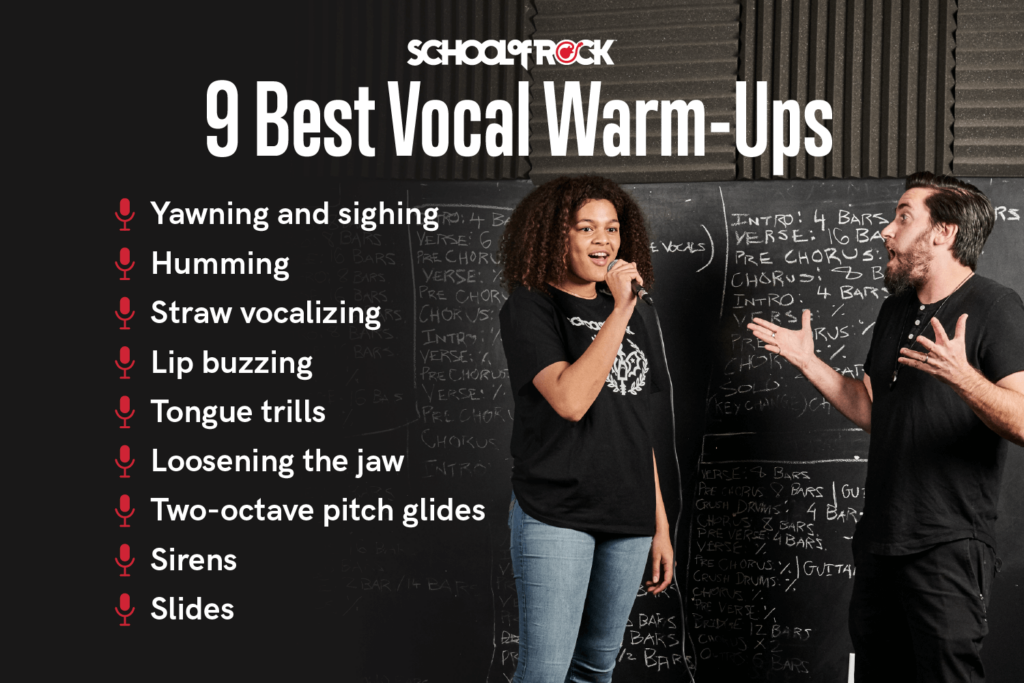
Before you begin any vocal activities, it is essential to warm up your voice. Warming up helps to prepare your vocal cords and muscles for singing or speaking, preventing strain and potential injury. Here are a few exercises you can do to warm up your voice:
1.1 Breathing exercises
Good breath control is crucial for producing clear and resonant vocals. To warm up your breath control, start by inhaling deeply through your nose, letting your abdomen expand. Slowly exhale through slightly parted lips, feeling the air leaving your body. Repeat this exercise several times, focusing on the sensation of your breath flowing in and out.
1.2 Vocal exercises
Vocal exercises help to loosen up your vocal cords and improve your vocal range. Start by humming gently, gradually increasing the pitch and volume. Then, try different vowel sounds, such as “ah,” “ee,” and “oo.” Move through your range, going from low to high and vice versa. This will help to warm up your vocal folds and prepare them for singing or speaking.
1.3 Lip trills and sirens
Lip trills and sirens are excellent exercises for warming up your lips, tongue, and vocal cords. To do lip trills, loosely close your lips and blow air through them, causing them to vibrate. This exercise helps to relax and strengthen your lips, promoting a more controlled sound. Sirens involve smoothly sliding your voice up and down in pitch, allowing your vocal cords to stretch and warm up.
2. Maintain Proper Posture
Maintaining proper posture while singing or speaking is crucial for optimal breath control and vocal production. Here are a few tips to help you maintain good posture:
2.1 Correct stance
Stand with your feet shoulder-width apart, keeping them firmly planted on the ground. Avoid locking your knees and distribute your weight evenly between both feet. Engage your core muscles to support your upper body, ensuring a stable stance while you sing or speak.
2.2 Relaxed shoulders and neck
Tension in your shoulders and neck can impede your vocal performance and cause strain. To maintain relaxed shoulders and neck, imagine a string gently pulling the crown of your head upward. This will help align your spine and release tension in your upper body.
2.3 Open chest
An open chest allows for better breath capacity and resonance. Take a moment to roll your shoulders back and down, opening up the front of your body. Stand tall and imagine there is a string attached to your sternum, gently lifting it upward. This will help create space for your diaphragm to expand fully during inhalation.

3. Control Your Breathing
Breathing is at the core of good vocal technique. Proper breath control supports vocal stability, range, and projection. Here are a few techniques to help you control your breath:
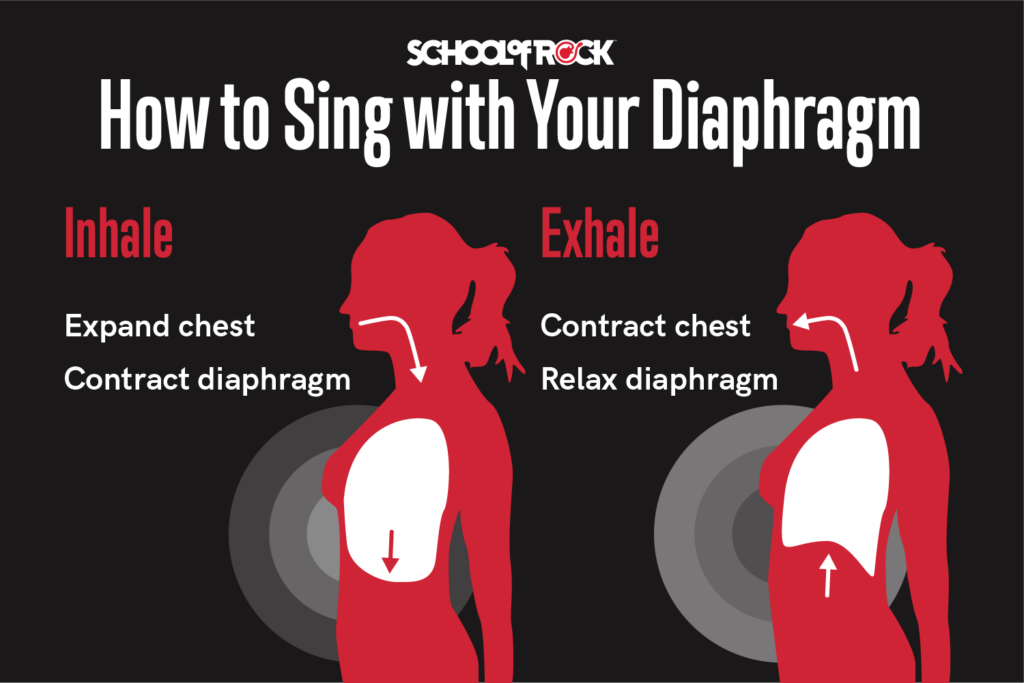
3.1 Diaphragmatic breathing
Diaphragmatic breathing, also known as belly breathing, involves using your diaphragm, a muscle located beneath your lungs, to inhale and exhale deeply. Place one hand on your abdomen and the other on your chest. Take a slow, deep breath, allowing your abdomen to rise while keeping your chest relatively still. Exhale fully and repeat this process, focusing on using your diaphragm to control your breath.
3.2 Breath support techniques
To optimize your breath control, practice engaging your core muscles to support your exhalation. Imagine a gentle contraction in your abdominal area as you exhale, providing steady and controlled airflow. This will help you maintain consistent breath support while singing or speaking.
3.3 Avoid shallow breathing
Shallow breathing limits your breath capacity and can lead to vocal strain. Avoid breathing high in your chest or taking quick, shallow breaths. Instead, focus on deep inhalations that fill your lungs completely and provide a solid foundation for your vocalizations.
4. Expand Your Range
Expanding your vocal range allows you to access higher or lower notes and adds versatility to your singing or speaking abilities. Here are some exercises to help you expand your vocal range:
4.1 Vocal exercises for range expansion
Begin by finding your comfortable range, the range in which your voice feels most natural and relaxed. From there, gradually explore notes slightly above and below your comfort zone. Repeat exercises using different vowel sounds, such as “ee,” “ah,” and “oo,” to target different areas of your voice.
4.2 Gradual increase in range
To prevent strain and vocal damage, it is important to gradually increase your vocal range over time. Pushing your voice too hard or attempting extreme jumps in range can be counterproductive. Be patient and consistent with your vocal exercises, gradually pushing the boundaries of your range in a safe and controlled manner.
4.3 Vocal fry exercises
Vocal fry exercises help to strengthen and expand your lower register. Start by producing a low and creaky “fry” sound, similar to the sound you make when clearing your throat. Practice moving smoothly between your regular voice and the fry sound, gradually increasing the pitch. This exercise can help you access lower notes more comfortably and extend the lower range of your voice.

5. Improve Your Tone
Tone refers to the quality and color of your voice. Developing proper resonance placement and relaxation techniques can greatly enhance the tone of your voice. Here are some tips to improve your tone:
5.1 Proper resonance placement
Resonance refers to where and how your voice vibrates in your body. Experiment with different placements of resonance, such as the chest, throat, and nasal areas. The goal is to find a balanced and resonant sound that suits your natural voice while minimizing tension and strain.
5.2 Vocal placement exercises
To improve your vocal placement, try humming while gently placing a finger on your cheekbones, the bridge of your nose, and your forehead. Notice the vibrations in each area and focus on producing a consistent and resonant sound. These exercises can help you develop a more focused and projected tone.
5.3 Tongue and jaw relaxation
Tension in the tongue and jaw can negatively affect the tone of your voice. Practice exercises that involve consciously relaxing your tongue and jaw, such as gently massaging the muscles with your fingers and performing slow and exaggerated jaw movements. This will help you achieve a more relaxed and resonant tone.
6. Enhance Your Diction
Clear and precise diction is essential for effective communication. Here are a few techniques to enhance your diction:
6.1 Articulation exercises
Articulation exercises involve practicing specific sounds and syllables to improve clarity and precision. For example, repeat tongue twisters and focus on clearly enunciating each word. Pay attention to consonant sounds that can often be muffled or blurred.
6.2 Tongue twisters
Tongue twisters are a fun and challenging way to improve your diction and articulation skills. Repeat tongue twisters like “Peter Piper picked a peck of pickled peppers” or “She sells seashells by the seashore” several times, gradually increasing your speed while maintaining clarity.
6.3 Practicing clear enunciation
Incorporate clear enunciation into your daily practice routine. This can be as simple as speaking or singing along to your favorite songs, focusing on pronouncing each word distinctly. By consistently practicing clear enunciation, you will develop a more confident and intelligible vocal delivery.
7. Develop Vocal Flexibility
Vocal flexibility refers to your ability to navigate smoothly and effortlessly through various vocal styles, melodies, and vocal runs. Here are some exercises to help you enhance your vocal flexibility:
7.1 Vocal agility exercises
Vocal agility exercises involve performing quick and intricate vocal patterns or melodic sequences. Start slow and gradually increase the speed as you gain proficiency. These exercises help to improve your vocal coordination and control, allowing you to navigate more complex musical passages.
7.2 Scale variations
Practicing scales in different rhythms and patterns can help develop your vocal flexibility. Experiment with ascending and descending scales in various intervals, such as thirds, fifths, and octaves. This will challenge your range, agility, and musical ear.
7.3 Riffs and runs
Riffs and runs are melodic embellishments that add flair and color to your vocal performance. Practice incorporating riffs and runs into songs by carefully breaking them down into smaller segments and gradually building up speed and accuracy. Developing these skills will enhance your vocal flexibility and creativity.
8. Apply Vocal Technique
Once you have a grasp of the fundamental vocal techniques, it is crucial to apply them effectively during your singing or speaking. Here are a few techniques to focus on:
8.1 Breath control while singing
Maintain consistent breath support and control throughout your phrases. Avoid gasping for breath or running out of air by practicing smooth and controlled inhalations and exhalations. This will help you deliver more sustained and powerful vocals.
8.2 Proper vowel shaping
Mastering proper vowel shaping is essential for clear and resonant singing. Pay attention to the shape of your mouth and throat when producing different vowel sounds. Experiment with different mouth positions and tongue placements to optimize the clarity and resonance of each vowel.
8.3 Dynamics and expression
Varying the dynamics and adding expression to your singing can greatly enhance your vocal performance. Practice singing softly and gradually increase the volume, paying attention to the emotional connection and intention behind the lyrics. Experiment with different nuances and phrasing to bring your song to life.
9. Seek Vocal Training
While self-practice can be beneficial, seeking vocal training from a professional can provide invaluable guidance and feedback. Here are a few options to consider:
9.1 Voice lessons with a professional
Engaging in one-on-one voice lessons with a qualified vocal coach or singing instructor can greatly accelerate your vocal growth. They can assess your current abilities, identify areas for improvement, and provide personalized exercises and techniques to help you reach your vocal goals.
9.2 Online vocal courses
If in-person lessons are not feasible, online vocal courses can offer an alternative. Many reputable vocal coaches and institutions offer comprehensive courses that cover various vocal techniques, theory, and exercises. These courses often include video demonstrations and provide guidance through recorded lessons and assignments.
9.3 Vocal coach or instructor
In addition to lessons and courses, consider working with a vocal coach or instructor to fine-tune specific aspects of your technique. Vocal coaches are experienced professionals who work closely with singers and performers to address individual vocal challenges, provide guidance, and assist with performance preparation.
10. Practice Consistently
Consistency is key when it comes to improving your vocals. Here are some tips to help you establish a consistent practice routine:
10.1 Daily vocal exercises
Set aside dedicated time each day for vocal exercises and warm-ups. Even just 15-30 minutes of focused practice can make a significant difference over time. Consistency allows your voice to build muscle memory and develop stamina.
10.2 Song practice
Apply the techniques and exercises you’ve learned to your favorite songs. Practice singing different genres, styles, and tempos to improve your versatility. Choose songs that challenge your range, dynamics, and vocal control, helping you grow as a vocalist.
10.3 Recording and self-evaluation
Record yourself while practicing or performing and listen back objectively to identify areas for improvement. Take note of your strengths and weaknesses, adjusting your practice routine accordingly. Self-evaluation is a powerful tool for tracking progress and fine-tuning your vocal skills.
In conclusion, to better your vocals, it is crucial to warm up your voice, maintain proper posture, control your breathing, expand your range, improve your tone, enhance your diction, develop vocal flexibility, apply vocal technique, seek vocal training, and practice consistently. By incorporating these techniques and exercises into your vocal practice routine, you can enhance your vocal abilities and reach new levels of vocal excellence.


