If you’ve ever dreamed of becoming a good singer, you might have wondered how to train your voice to reach its full potential. Well, look no further! In this article, we will explore various techniques and tips that can help you develop your singing skills and transform your voice into that of a great singer. From proper breathing techniques to vocal exercises, we will guide you on your journey to becoming a good singer and achieving your singing goals. So, let’s get started and discover how you can train your voice to become a good singer!

Breathing techniques
Diaphragmatic breathing
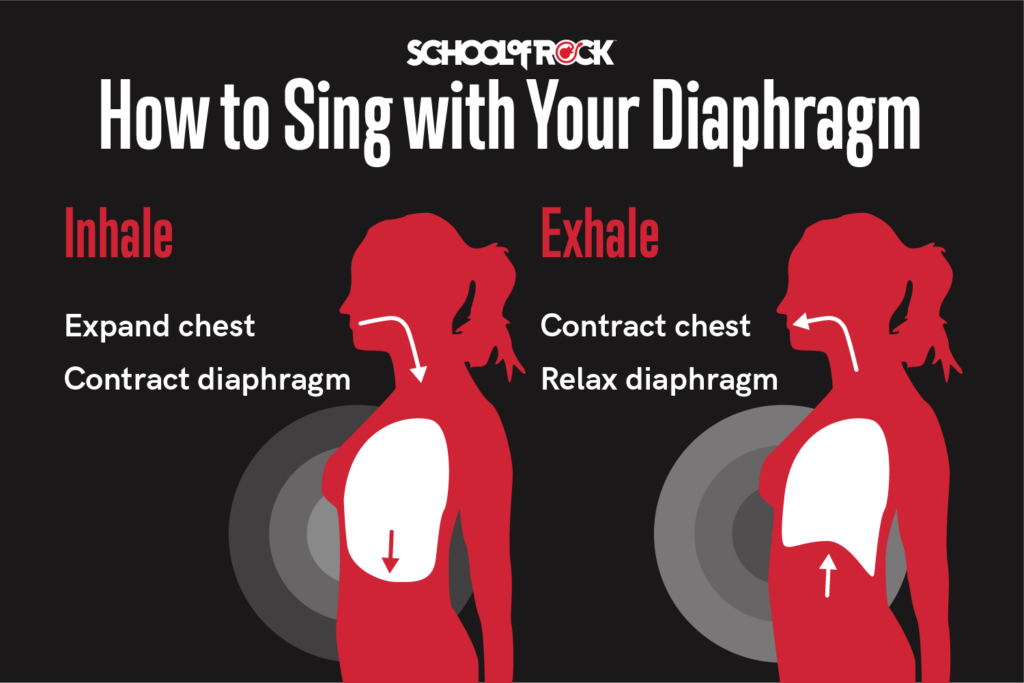
One of the fundamental principles of singing is learning how to breathe properly. Diaphragmatic breathing, also known as belly breathing, is a technique that allows you to use your diaphragm effectively and take in a deep, controlled breath. To practice diaphragmatic breathing, sit or stand with relaxed shoulders and place one hand on your belly and the other on your chest. As you inhale deeply, focus on expanding your belly instead of your chest. This allows your diaphragm to descend and create more space for air in your lungs. When you exhale, imagine releasing the air slowly from your diaphragm, engaging your abdominal muscles to control the flow of breath.
Rib cage expansion
Rib cage expansion involves utilizing the intercostal muscles, the muscles between your ribs, to further enhance your breath support. Stand up straight with your shoulders relaxed and your hands on your rib cage. Inhale deeply through your nose, focusing on expanding your rib cage outward. You should feel your ribs expand laterally and to the back. Exhale slowly and consciously, allowing your rib cage to gradually return to its resting position. By practicing rib cage expansion exercises regularly, you can strengthen your intercostal muscles and improve your lung capacity.
Controlled release of air
Controlling the release of air while you sing not only helps you maintain proper breath support, but it also enables you to sing with more control and precision. To practice controlled release of air, sit or stand in a comfortable position and take a deep breath. As you exhale, visualize the air flowing out smoothly and steadily, as if you were blowing gently on a candle flame without extinguishing it. Pay attention to maintaining a consistent air flow throughout your phrases, avoiding any sudden bursts or release of air. Developing this skill will not only enhance the quality of your singing but also help you sustain notes for longer durations.
Vocal warm-up exercises
Lip trills
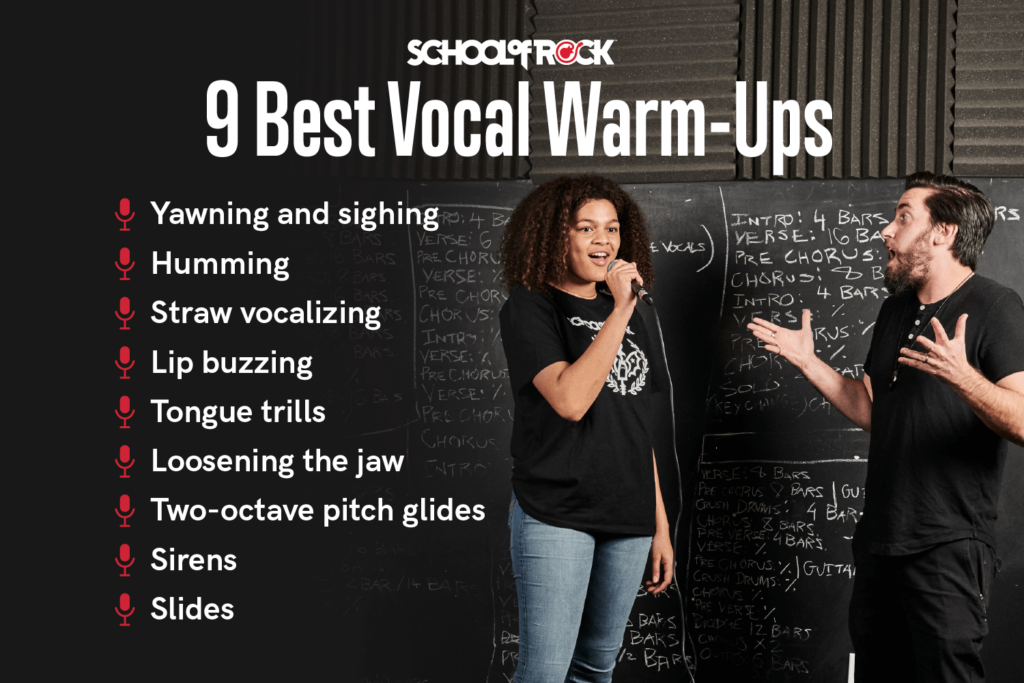
Lip trills, also known as lip rolls, are a fantastic warm-up exercise that helps relax and warm up the vocal cords. To perform lip trills, lightly press your lips together and blow air through them, creating a fluttering sound. Start with a gentle and slow airflow, gradually increasing the intensity. Focus on maintaining a relaxed jaw and throat throughout the exercise. Lip trills engage both your diaphragm and vocal cords, promoting proper airflow and flexibility in your voice. By incorporating lip trills into your warm-up routine, you can improve your vocal range and flexibility while reducing tension in the vocal muscles.
Humming
Humming is another excellent warm-up exercise that can help you relax your voice and improve resonance. Begin by taking a deep breath and gently closing your lips. Release a small amount of air, creating a humming sound. Start with a comfortable pitch and gradually explore your vocal range while humming. Focus on feeling the vibrations resonating in your face, nose, and sinuses. Humming helps to stimulate the vocal folds and warm up the vocal tract, preparing your voice for more demanding vocal techniques.
Tongue exercises
Tongue exercises are essential for improving articulation and diction while singing. These exercises can also help relax tension in your tongue and jaw, allowing for a freer and more controlled voice. One simple tongue exercise involves sticking your tongue out as far as possible and holding it in that position for a few seconds. Then, retract your tongue back into your mouth and repeat the exercise several times. You can also try moving your tongue from side to side or up and down to further stretch and release any tension. Adding tongue exercises to your warm-up routine will strengthen the muscles involved in speech and singing, resulting in clearer and more precise vocal delivery.
Pitch and tone control
Pitch accuracy exercises
Developing accurate pitch control is crucial for singing in tune. To improve pitch accuracy, start by training your ears to recognize and replicate different pitches. You can do this by using a keyboard or a piano to play and sing various notes, aiming to match the pitch of each note as closely as possible. Another effective exercise is to practice singing intervals, which are the distances between two notes. Start with simple intervals, such as a minor third or a perfect fifth, and gradually progress to more challenging ones. By consistently working on pitch accuracy exercises, you can train your vocal muscles to hit the right notes with precision.
Vowel modification
Vowel modification refers to adjusting the shape of your mouth and throat to achieve the desired tone quality and resonance while singing different vowels. Experimenting with vowel modifications can improve your vocal range and help you sing with more ease. For example, when singing higher notes, slightly modify the vowel sound towards an “ee” or “ih” sound, which naturally allows for more space in the vocal tract. Conversely, when singing lower notes, consider modifying the vowel sound towards an “oh” or “oo” sound for a richer and fuller tone. By understanding and practicing vowel modification, you can achieve better tonal control and flexibility in your voice.
Chest voice and head voice blending
Blending the chest voice (lower register) and head voice (higher register) is crucial for achieving a balanced and seamless vocal tone across your entire range. Start by identifying your vocal break, which is the point where your voice transitions from chest to head voice. Practice sliding smoothly and gradually through your vocal break, focusing on maintaining a consistent tone and minimizing any drastic shifts in resonance. As you become more comfortable with the sensation, experiment with different exercises and vocalizations that integrate the chest and head voice registers. This blending technique will enable you to sing with a more connected and unified voice.
Range expansion
Lip rolls
Lip rolls, mentioned earlier as a vocal warm-up exercise, can also be used to expand your vocal range. Begin by performing lip rolls at a comfortable pitch and gradually slide up or down within your range while maintaining the lip roll. This exercise helps to strengthen the muscles involved in producing higher or lower notes, allowing you to gradually extend your vocal range over time. It is essential to approach range expansion gently and gradually to avoid straining your voice. Consistent practice with lip rolls can help you achieve greater control and flexibility in your vocal range.
Sighs and sirens
Sighs and sirens are vocal exercises that help develop smooth and effortless transitions between different vocal registers while expanding your range. Start by taking a deep breath and releasing a gentle sigh on a sustained “huh” sound, sliding from your lowest comfortable pitch to your highest. Focus on maintaining a relaxed and open throat throughout the exercise. Sirens involve a similar concept but are performed on a sliding scale, starting from a low note and gradually ascending to a high note or vice versa. These exercises promote vocal flexibility, allowing you to explore the outer limits of your range while maintaining vocal freedom.
Descending and ascending scales
Singing descending and ascending scales is a classic exercise for expanding both your lower and upper vocal range. Begin by choosing a comfortable starting pitch and singing a descending scale, moving down one note at a time. As you descend, focus on keeping a relaxed and open throat to encourage clear and smooth vocal production. Once you are comfortable with descending scales, start incorporating ascending scales to challenge and expand your upper range. Remember to approach these exercises with care and avoid straining your voice. Regular practice of descending and ascending scales will gradually broaden your range, allowing you to explore higher and lower notes with confidence.
Articulation and diction
Tongue twisters
Tongue twisters are excellent exercises for improving articulation and clarity in your singing. Start by practicing simple tongue twisters, such as “She sells seashells by the seashore” or “Peter Piper picked a peck of pickled peppers.” Begin slowly and gradually increase your speed as you become more comfortable with the phrases. Focus on enunciating each word clearly and ensuring that all consonants are pronounced effectively. Practicing tongue twisters regularly can help you develop faster and more precise articulation skills, allowing you to deliver lyrics with clarity and precision.
Consonant exercises
Consonant exercises focus on honing your ability to articulate specific consonant sounds accurately. Choose consonants that challenge you and incorporate them into vocal exercises or scales. For example, practice singing a vocal scale using only words that start with the letter “B” or “D.” This exercise helps you focus on properly forming these consonant sounds while maintaining a steady airflow. Another exercise involves isolating consonant sounds in different parts of a phrase or song, ensuring that they are pronounced distinctly and clearly. By consistently working on consonant exercises, you can improve your articulation and enhance the clarity of your lyrics.
Lip and jaw movement exercises
Lip and jaw movement exercises are beneficial for enhancing articulation and reducing tension in the facial muscles while singing. Start by gently massaging your lips and jaw to relax any tightness or discomfort. Then, incorporate movements such as smiling, frowning, or stretching your jaw while singing simple scales or phrases. These exercises promote flexibility in your lips and jaw, enabling you to articulate vowels and consonants more effectively. By incorporating lip and jaw movement exercises into your vocal routine, you can develop greater control over your facial muscles and improve your overall singing technique.
Resonance and projection
Yawn-sigh exercise
The yawn-sigh exercise is an effective technique for releasing tension and optimizing resonance in your voice. Begin by taking a slow, deep breath through your nose, imagining the sensation of a gentle yawn. As you exhale, release a soft “sigh” sound, allowing your voice to resonate naturally in your throat and chest. Focus on maintaining an open and relaxed throat throughout the exercise. The yawn-sigh exercise promotes a deeper and more resonant sound by encouraging your vocal cords and vocal tract to align properly. Regular practice of this exercise will help you achieve a more powerful and vibrant vocal projection.
Using the mask
The concept of “using the mask” refers to directing your sound towards the front of your face, specifically the nasal and sinus cavities, to optimize resonance. To achieve this, imagine that your sound is buzzing and resonating directly behind your nose and forehead. As you sing, mentally focus on projecting your sound towards the mask. You can also gently tap your fingers on your cheekbones to increase your awareness of the areas where the sound should resonate. Using the mask technique enhances the clarity, brightness, and projection of your voice. Practice this technique during vocal exercises and songs to develop a more resonant and focused sound.
Singing in various acoustic environments
Practicing and performing in different acoustic environments can help you develop your ability to project your voice effectively. Singing in a larger, more reverberant space, such as a church or theater, challenges you to produce a more powerful and resonant sound to fill the room. Conversely, singing in a smaller and less reverberant space requires more focus on clarity and precision, as the sound does not have the same natural amplification. By rehearsing and performing in a variety of acoustic environments, you can adapt your vocal technique accordingly and enhance your ability to project your voice in different performance settings.
Vocal health and hydration
Maintaining proper hydration
Keeping your vocal cords properly hydrated is essential for maintaining vocal health. Drink plenty of water throughout the day to ensure your vocal cords stay moist, allowing them to vibrate freely and produce sound without strain or discomfort. It is especially important to hydrate before and during singing sessions or performances. Avoid beverages that can dehydrate your body, such as caffeinated and alcoholic drinks, as they can dry out your vocal cords. Additionally, consider using a humidifier in your living or sleeping space to provide extra moisture for your vocal cords.
Avoiding vocal strain
Avoiding vocal strain is crucial for preserving the health and longevity of your voice. To prevent straining your vocal cords, be mindful of your breathing technique, posture, and vocal volume. Proper breath support and alignment allow for more efficient vocal production, reducing strain. Additionally, avoid excessive yelling or shouting, as this can put unnecessary stress on your vocal cords. If you feel any discomfort or hoarseness during or after singing, take it as a sign to rest and give your voice time to recover. By adopting healthy vocal habits and listening to your body, you can protect your voice and prevent vocal strain.
Resting the voice
Just as athletes need rest to recover and perform at their best, singers also require vocal rest to maintain vocal health. Give your voice regular breaks, especially after intense singing sessions or performances. Avoid excessive talking or singing during periods of vocal rest to allow your vocal cords to recover fully. It is also important to get sufficient sleep, as restful sleep allows your body to regenerate and rejuvenate your vocal cords. Prioritize self-care and make sure to incorporate regular vocal rest in your practice routine to ensure the longevity and health of your voice.
Ear training and pitch perception
Interval recognition
Developing your ability to recognize intervals, the distance between two notes, is essential for accurate pitch singing. Start by practicing interval recognition exercises, such as listening to pairs of notes and identifying the distance between them (e.g., a major third, a perfect fourth). With practice, your ear will become more attuned to these intervals, enabling you to reproduce them more accurately while singing. Interval recognition is a valuable skill that strengthens your overall pitch perception and helps you sing in tune with confidence.
Singing scales with a reference note
Singing scales with a reference note is an excellent way to train your ear and improve your pitch accuracy. Start by playing a single note on a keyboard or piano and try to match that pitch with your voice. Once you can consistently produce the correct pitch, begin singing ascending and descending scales from that reference note. Focus on staying in tune with the reference note throughout the scales, paying attention to any deviations in pitch. This exercise trains your ear to recognize and internalize pitch relationships, enhancing your ability to hit the right notes while singing.
Sight-singing exercises
Sight-singing exercises involve singing music from a sheet without previous exposure or practice. Consisting of unfamiliar melodies and rhythms, sight-singing exercises help develop your ability to read music and accurately reproduce the intended pitches. Start with simple exercises, gradually progressing to more complex pieces as you become more comfortable. Sight-singing challenges your pitch perception, rhythmic accuracy, and overall musicianship. By regularly practicing sight-singing exercises, you can improve your ability to quickly and accurately interpret and sing music.

Performance techniques
Phrasing and dynamics
Phrasing and dynamics play a vital role in giving life and emotion to your vocal performances. Phrasing involves understanding the structure of a song and emphasizing musical phrases to create a cohesive and expressive interpretation. Experiment with different phrasing options to highlight specific lyrics or melody lines. Dynamics, on the other hand, refer to the variations in volume and intensity throughout a song. Incorporate dynamics to convey emotions and add depth to your performances, such as singing softly during quieter sections and gradually increasing volume during climactic moments. Understanding and incorporating phrasing and dynamics elevate your vocal performances, allowing you to connect with your audience on a deeper level.
Connecting with lyrics
To truly captivate an audience, it is crucial to connect with the lyrics you are singing. Take the time to understand the meaning and emotions behind the words, allowing yourself to internalize the message. Through this understanding, you can infuse your performance with authenticity and sincerity. Experiment with different vocal techniques, such as subtle vocal ornaments or emotional vocal tones, to convey the intended emotions of the lyrics. Connecting with the lyrics not only enhances your performance but also enables you to connect with your audience on an emotional level, creating a memorable and impactful experience.
Stage presence and confidence
Stage presence and confidence are essential aspects of being a compelling performer. Stage presence involves your posture, body language, and overall demeanor on stage. Maintain an upright and open stance, avoiding any excessive tension or rigidity. Engage with your audience through eye contact and show your enthusiasm and passion for the music you are performing. Confidence is equally important, as it allows you to deliver a strong and assured performance. Practice performing in front of others, whether it be friends, family, or even a mirror, to build confidence and familiarize yourself with being the center of attention. By cultivating stage presence and confidence, you can elevate your performances and leave a lasting impression on your audience.
Seeking professional guidance
Finding a vocal coach
Working with a vocal coach provides invaluable guidance and support throughout your vocal training journey. A vocal coach can assess your current abilities, identify areas for improvement, and provide personalized instruction and exercises to help you reach your vocal goals. They can also teach you proper vocal techniques, address any vocal issues or challenges you encounter, and provide motivation and feedback to help you grow as a singer. Look for a qualified vocal coach with experience and expertise in the style of singing you wish to pursue. Investing in professional guidance can significantly accelerate your progress and ensure you develop healthy and effective vocal habits.
Joining a choir or vocal group
Joining a choir or vocal group is an excellent way to develop your singing skills, explore different genres of music, and experience the joys of harmonizing with others. Singing in a group setting allows you to develop your ability to blend with other voices, improve your sight-reading skills, and enhance your overall musicianship. It also provides opportunities for regular performances, contributing to your stage presence and confidence. Whether it is a school choir, community choir, or a cappella group, participating in a vocal ensemble can be an enriching and rewarding experience that helps you grow as a singer.
Participating in singing competitions or workshops
Singing competitions and workshops offer unique opportunities to showcase your talents, gain performance experience, and receive feedback from industry professionals. Competing in these events challenges you to push your boundaries and refine your vocal technique under pressure. Additionally, participating in workshops and masterclasses allows you to learn from renowned vocalists and industry experts, who can provide insights and techniques to enhance your singing abilities. These events provide valuable networking opportunities and expose you to a supportive community of fellow singers. By actively seeking out singing competitions and workshops, you can accelerate your growth and broaden your horizons as a singer.
In conclusion, training your voice to become a good singer requires a multifaceted approach that encompasses various techniques and exercises. By incorporating breathing techniques, vocal warm-up exercises, pitch and tone control exercises, range expansion exercises, articulation and diction exercises, resonance and projection techniques, vocal health and hydration practices, ear training and pitch perception exercises, performance techniques, and seeking professional guidance, you can develop a strong foundation and continuously improve your singing skills. Consistency, patience, and a passion for singing are key as you embark on this exciting journey towards becoming a skilled and confident vocalist.


