
In this article, you will discover the essential steps to improve your singing abilities and unlock your full potential as a vocalist. From mastering proper posture and breathing techniques to developing control over your vocal range, this step-by-step guide will equip you with the tools to enhance your singing voice. Whether you’re a beginner or looking to refine your skills, these practical tips and exercises will help you become a better singer. Get ready to embark on a journey of self-discovery and watch your singing soar to new heights.
Warm Up Your Voice
Do vocal exercises
Before you start belting out your favorite tunes, it’s essential to warm up your voice first. Vocal exercises are a great way to prepare your vocal cords and loosen up your muscles. These exercises help lubricate your vocal cords and improve their flexibility. One effective vocal exercise is the lip trill. Simply flutter your lips together while producing a steady sound. This exercise helps to relax your vocal cords and reduce tension.
Practice breath control
Excellent breath control is crucial for singing with power and endurance. To practice breath control, start by taking deep breaths and filling your diaphragm with air. Breathe in through your nose, expand your abdomen, and let the air flow out naturally. Gradually increase the amount of time you can hold a steady breath. This exercise strengthens your diaphragm and increases your lung capacity.
Stretch your vocal cords
Just like any muscle in your body, your vocal cords need stretching to stay flexible and agile. Gentle stretching exercises can help condition your vocal cords and prevent strain or damage while singing. One effective exercise is the yawn-sigh technique. Open your mouth wide as if you were yawning and then gently release a long “sigh” sound as you exhale. This exercise helps to relax your vocal cords and stretch them naturally.
Maintain Proper Posture
Stand tall
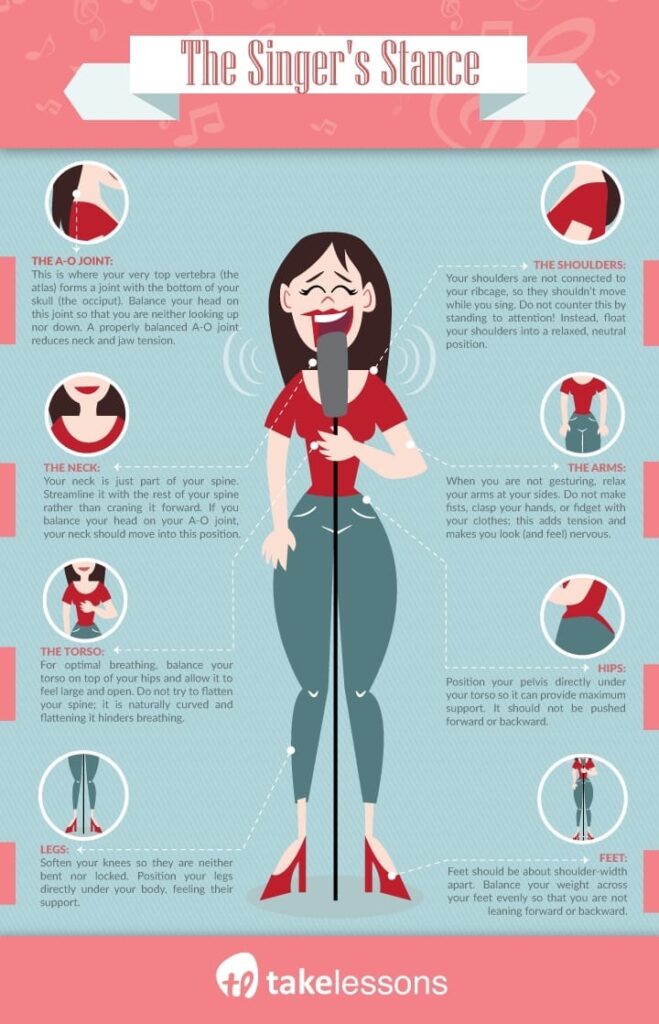
Your posture plays a significant role in your vocal performance. Standing tall with good upper body alignment allows for better breath control and optimal vocal production. Make sure to keep your shoulders relaxed and back straight, avoiding slouching or hunching forward. By standing tall, you create a clear path for the airflow and promote a confident and powerful singing voice.
Relax your body
Tension in your body can negatively impact your singing ability. Before singing, take a moment to relax your entire body, including your face, neck, and shoulders. Shake off any tension by gently rolling your shoulders and neck. This simple act of relaxation will help you sing with ease and produce a smooth and controlled voice.
Align your head, neck, and spine
Maintaining proper alignment between your head, neck, and spine is essential for optimal vocal production. Your chin should be parallel to the floor, and there should be no tension or strain in your neck. Keep your head and neck in a relaxed, neutral position, allowing for unrestricted airflow and resonance. Proper alignment ensures that your voice projects effortlessly and avoids unnecessary strain.

Master Diaphragmatic Breathing
Understand the role of the diaphragm
The diaphragm is a dome-shaped muscle located beneath your lungs, separating them from your abdominal cavity. It plays a crucial role in efficient and controlled breathing for singing. When you breathe in, the diaphragm contracts and moves downward, allowing maximum lung expansion. Understanding how the diaphragm works is key to developing proper breath support and control.
Practice diaphragmatic breathing exercises
To develop diaphragmatic breathing, try these exercises. Lie down on your back with your knees bent. Place one hand on your upper chest and the other on your abdomen. As you inhale deeply, focus on having the hand on your abdomen rise while keeping the hand on your chest relatively still. This exercise helps you become more aware of using your diaphragm to breathe and strengthens your diaphragmatic muscles.
Control your breath support
Once you have mastered diaphragmatic breathing, the next step is to develop breath support. This involves controlling the airflow as you sing, allowing you to sustain long phrases and hit those high notes effortlessly. To practice breath support, try hissing exercises. Take a deep breath, then hiss out the air slowly and evenly, making the hissing sound last as long as possible. This exercise helps build stamina and control over your breath support.
Find Your Vocal Range
Identify your chest voice and head voice
Your vocal range refers to the span of notes you can comfortably sing. To find your vocal range, it’s essential to identify your chest voice and head voice. Chest voice resonates in your lower range, while head voice resonates in your higher range. Start by singing a comfortable note in your speaking voice, then gradually ascend higher until you feel the switch to your head voice. Finding the balance between the two registers will help you determine your vocal range.
Practice vocal exercises across your range
To expand your vocal range, it’s crucial to practice vocal exercises that target both your chest and head voice. Start with ascending and descending scales, moving gradually from your lower range to your higher range. Pay attention to any breaks or transitions between registers, and work on smoothing them out. By practicing across your entire range, you will develop flexibility and control over your voice.
Expand and strengthen your vocal range
While everyone has a natural vocal range, it is possible to expand and strengthen it with practice. Vocal exercises like sirens, where you smoothly glide from your lowest note to your highest note, can help expand your range gradually. Start by singing comfortably within your current range and gradually extend it by pushing yourself slightly higher or lower each time. Consistent practice will strengthen your vocal muscles and allow you to sing with ease in a wider range.
Improve Your Pitch
Train your ears
Pitch accuracy is a crucial aspect of singing. To improve your pitch, you must develop your ability to hear and recognize different tones. Train your ears by regularly listening to music and focusing on the pitch of the notes. Pay attention to the relationship between the melody and the harmony, and try to sing along with the songs to match the pitch. The more you train your ears, the better you will be able to reproduce the correct pitch while singing.
Use pitch exercises
Pitch exercises are an excellent way to fine-tune your ability to hit the right notes consistently. One popular exercise is the “sirens” exercise mentioned earlier. Another effective exercise is the “arpeggio” exercise, where you sing each note of a chord separately. Start from a comfortable pitch and gradually increase the difficulty. By practicing pitch exercises regularly, you will become more precise and confident in your pitch control.
Focus on accuracy and stability
When it comes to pitch, accuracy and stability are key. Aim to hit each note precisely, without sliding or wavering. Practice sustaining long notes and holding them steady without any fluctuations in pitch. An excellent exercise for this is singing scales with a sustained “ah” sound. Concentrate on maintaining a consistent pitch throughout the entire scale. With patience and practice, you will develop a strong sense of pitch accuracy and stability.
Develop Proper Vocal Technique
Learn about vocal placement
Vocal placement refers to the resonance and placement of your sound within your vocal cavity. It determines the quality and projection of your voice. To develop proper vocal technique, learn to identify different resonating areas such as chest resonance, head resonance, and mask resonance. Experiment with different vowel shapes and positions to discover the most optimal placement for your voice. With practice, you will achieve a balanced and resonant vocal tone.
Practice correct vowel and consonant pronunciation
Clear and precise pronunciation of both vowels and consonants is crucial for effective singing. Proper vowel pronunciation ensures that your voice resonates optimally, while crisp consonant pronunciation allows for better diction and clarity. Practice singing different vowel and consonant sounds separately, paying attention to correct tongue and lip placement. By training your articulators to produce accurate sounds, you will enhance your overall vocal performance.
Work on vocal resonance
Vocal resonance refers to the richness and projection of your voice. To improve your vocal resonance, practice “forward placement” exercises. Start by making a buzzing sound like a bee, focusing on feeling the vibrations in your face and nasal passages. Gradually incorporate this buzzing sensation into your singing, aiming for a clear and resonant tone. By working on your vocal resonance, you will achieve a fuller and more captivating sound.
Control Your Vocal Dynamics
Work on volume control
Having control over your vocal dynamics allows you to convey emotions and create a diverse and engaging performance. Practice singing at various volumes, from soft and gentle to loud and powerful. Experiment with different vocal techniques such as crescendos and decrescendos to alter the volume of specific phrases or words. By mastering volume control, you will add depth and expression to your singing.
Practice vocal dynamics exercises
To further enhance your vocal dynamics, incorporate exercises that focus on dynamic range. Start by singing a simple phrase and gradually increase or decrease the volume as instructed. You can also practice crescendos and decrescendos on sustained notes, gradually building or reducing the intensity. These exercises strengthen your control over your vocal muscles, allowing you to effortlessly navigate through various dynamic levels.
Master subtle vocal nuances
Great singers pay attention to the subtle nuances within their vocals, allowing them to add color and personality to their performances. Focus on small details such as vibrato, phrasing, and subtle pitch variations. Experiment with different vocal ornaments such as runs or trills to add flair to your singing. By mastering these nuances, you will bring your performances to life and captivate your audience.
Enhance Your Articulation
Practice tongue twisters
Tongue twisters are an excellent way to improve your articulation and strengthen your diction. These exercises challenge your tongue and mouth muscles to pronounce words quickly and accurately. Try saying tongue twisters like “Peter Piper picked a peck of pickled peppers” or “She sells seashells by the seashore” with clarity and speed. Regular practice will enhance your articulation and ensure that your lyrics are clearly understood when you sing.
Work on diction and clarity
Clear diction and enunciation are essential for effective singing. Pay attention to how you pronounce each word, ensuring that your vocals are crisp and easily understood. Practice singing songs with complex lyrics, focusing on articulating each word distinctly. Use a mirror to observe your mouth movements and make any necessary adjustments. By working on your diction and clarity, you will engage your audience and make your lyrics more impactful.
Develop agility in your articulators
As a singer, having agility in your vocal articulators is vital for singing fast-paced lyrics or intricate melodies. Practice exercises that target your tongue, lips, and jaw, enhancing their flexibility. For example, try singing scales or simple melodies while purposely accentuating each syllable or consonant sound. This exercise will train your articulators to move quickly and precisely, allowing you to tackle challenging vocal passages with ease.

Eliminate Tension and Strain
Relax your jaw, tongue, and throat
Tension in your jaw, tongue, and throat can hinder your singing. Before you embark on a singing session, take a moment to release any tension in these areas. Gently massage your jaw, wiggle your tongue, and swallow to relax your throat. Throughout your singing, be mindful of maintaining a relaxed and open jaw, a loose tongue, and a supple throat. By eliminating tension, you ensure the optimal flow of sound and prevent strain or damage.
Release tension in your shoulders and neck
Tension in your shoulders and neck can affect your breathing and overall vocal performance. Stand tall and gently roll your shoulders backward and forward to release any tension. Stretch your neck by tilting your head from side to side and gently massaging the muscles. By keeping your shoulders and neck relaxed, you create a more comfortable and open space for breathing and singing.
Avoid strain during challenging vocal passages
Sometimes, challenging vocal passages can lead to strain or vocal fatigue. To avoid this, take breaks and listen to your body. If a particular section feels difficult or uncomfortable, pause, and rest your voice. Gradually work on challenging passages, breaking them down into smaller, more manageable parts. By avoiding strain and pacing yourself, you will maintain the health and longevity of your voice.
Seek Professional Guidance
Consider voice lessons
If you’re serious about improving your singing, consider taking voice lessons from a qualified vocal instructor. Voice lessons provide valuable guidance tailored to your individual needs and help you develop proper vocal technique. A professional voice teacher can offer personalized feedback, identify areas for improvement, and provide exercises and vocal exercises to enhance your skills. With the guidance of a knowledgeable instructor, you will progress more quickly and effectively.
Work with a vocal coach
In addition to voice lessons, working with a vocal coach can further advance your singing abilities. A vocal coach not only focuses on technical aspects of singing but also helps you develop your unique style and interpretive skills. They can assist with song selection, interpretation, and performance technique. With the guidance and expertise of a vocal coach, you can refine your singing and reach new levels of artistry.
Participate in group singing activities
Joining group singing activities, such as choirs or vocal ensembles, can be beneficial for your vocal development. Singing in a group setting allows you to blend your voice with others, harmonize, and improve your overall musicianship. It also provides an opportunity to gain confidence and perform in front of an audience. Group singing activities foster a sense of camaraderie and create a supportive environment for growth as a singer.
By following these step-by-step guidelines and implementing the various techniques and exercises outlined above, you can significantly improve your singing ability. Remember, consistency, patience, and practice are key to becoming a better singer. So warm up your voice, work on your posture and breathing, explore your vocal range, improve your pitch, develop proper technique, control your dynamics, enhance your articulation, eliminate tension and strain, and don’t hesitate to seek professional guidance. With dedication and perseverance, you’ll be amazed at the progress you can make on your journey to becoming a better singer. Happy singing!


