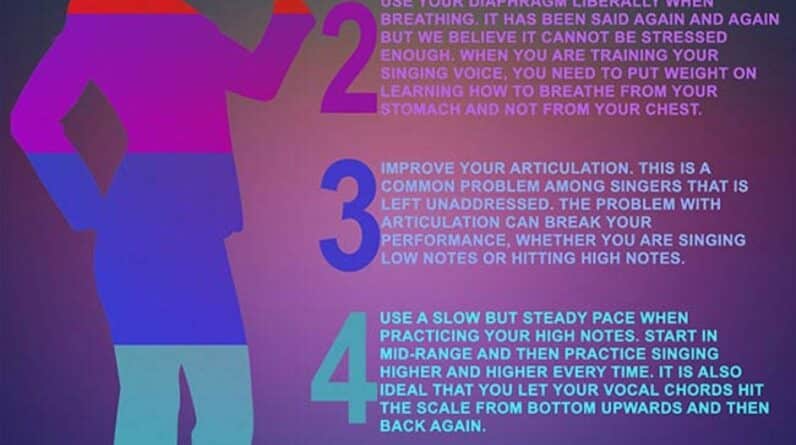
If you’ve ever wanted to improve your singing skills, look no further. This article is designed specifically to help you enhance your singing abilities and take your talent to the next level. Whether you’re a beginner or have been singing for years, these tips and techniques will help you develop a stronger voice, improve your pitch, and increase your vocal range. So get ready to step up your singing game and amaze yourself and others with your improved vocal abilities. Let’s get started!
Vocal Warm-Up Exercises
Lip Trills
To start your vocal warm-up routine, you can begin with lip trills. Lip trills are a simple yet effective exercise that help to relax and warm up your lips, facial muscles, and vocal cords. To do this exercise, simply take a deep breath and exhale while making a “brr” sound with your lips gently vibrating. This exercise helps to increase airflow and prepare your vocal cords for singing.
Tongue Twisters
Tongue twisters are not only great for improving your diction and enunciation, but they also serve as excellent warm-up exercises for your vocal muscles. These exercises help to loosen up your tongue, strengthen your articulation, and improve your overall vocal control. Try saying tongue twisters like “Peter Piper picked a peck of pickled peppers” or “She sells seashells by the seashore” slowly at first, then gradually increase your speed as you become more comfortable.
Humming Scales
Humming scales is another fantastic vocal warm-up exercise that helps to warm up your vocal cords, improve your breath control, and increase your vocal range. Start by choosing a scale, such as a major or minor scale, and then hum along as you ascend and descend the notes. Focus on maintaining a steady airflow and a relaxed jaw while humming the scales. This exercise also helps with developing your ear training and pitch accuracy.
Breathing Techniques
Diaphragmatic Breathing
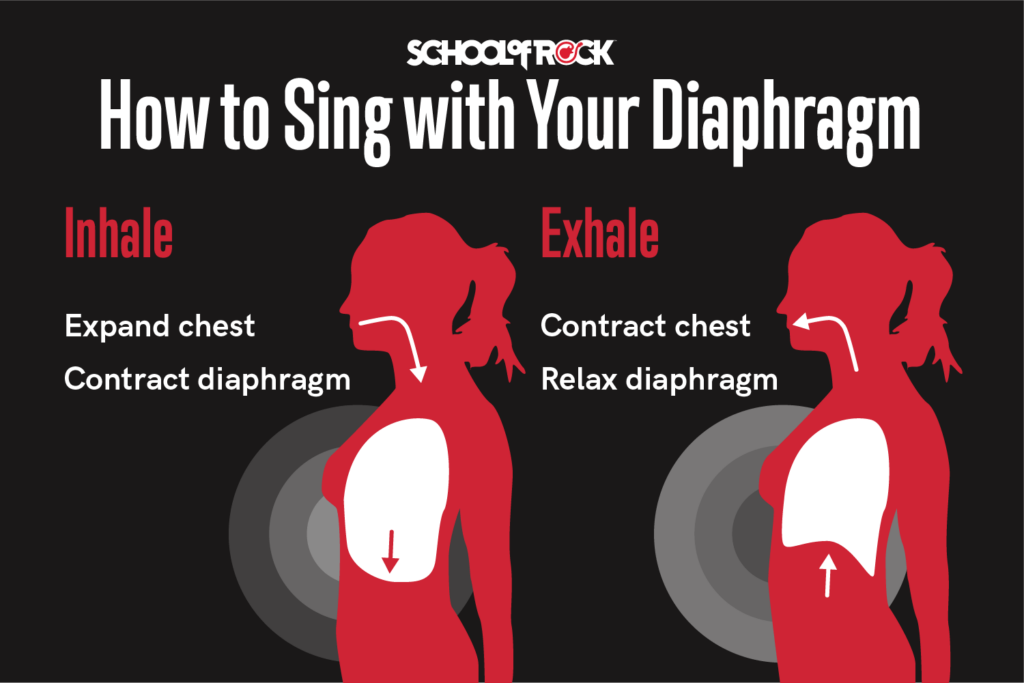
Diaphragmatic breathing is an essential technique for singers as it helps to maximize your breath support and control. To practice diaphragmatic breathing, place one hand on your chest and the other on your stomach. Take a deep breath in, making sure your stomach expands while keeping your chest relatively still. Exhale slowly and fully, allowing your stomach to gradually return to its original position. This technique enables you to take in more air and produce a rich, supported sound.
Controlled Breaths
Controlled breaths refer to consciously controlling the inhalation and exhalation process while singing. By inhaling and exhaling with control, you can maintain a consistent airflow and prevent straining your vocal cords. Practice taking slow, controlled breaths, ensuring that your inhalations and exhalations are smooth and steady. This technique allows you to have better control over your voice and maintain a stable pitch.
Breath Support
Breath support is crucial for producing a powerful and resonant sound. To improve your breath support, imagine your voice coming from your diaphragm rather than your throat. As you sing, focus on engaging your abdominal muscles and maintaining a steady flow of air. Avoid shallow breathing, and instead, aim for deep breaths that support your voice throughout each phrase. Developing strong breath support will enhance your vocal projection and longevity.
Pitch Control
Tonal Memory Exercises
Tonal memory exercises are designed to improve your ability to reproduce specific pitches accurately. You can begin by listening to a series of notes and then trying to replicate them using your voice. Start with simple melodies or scales and gradually increase the complexity as you progress. This exercise trains your ear and helps develop pitch accuracy and control.
Ear Training
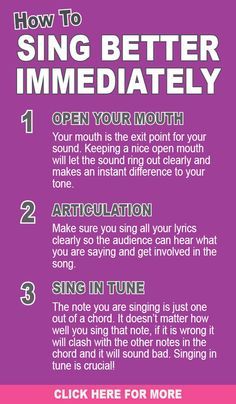
Ear training is a fundamental aspect of singing. By training your ear, you can recognize and reproduce different pitches, intervals, and harmonies more accurately. Practice activities such as singing scales, arpeggios, or simple melodies while focusing on matching the pitch and recognizing any discrepancies. Over time, your ear will become more attuned to the nuances of pitch, enabling you to sing more in tune.
Pitch Slides
Pitch slides, also known as glissandos, are exercises that involve gradually sliding your voice from one note to another. Begin by choosing a comfortable starting note and then smoothly slide your voice up or down to a target note. Focus on maintaining a steady and controlled voice while transitioning between the pitches. This exercise helps expand your vocal range, improve your pitch control, and enhance your overall vocal flexibility.
Vocal Range Expansion
Chest Voice Exercises
Chest voice refers to the lower register of your voice, and exercising this range can help you strengthen and expand it. Start by practicing exercises that focus on singing comfortably in the lower range without straining. Begin with simple scales or descending arpeggios, gradually extending your range as you progress. By developing your chest voice, you will be able to sing lower notes with more power and richness.
Head Voice Exercises
Head voice, also known as falsetto, is the higher register of your voice. To improve your head voice, start with gentle sirens or sirens on specific vowel sounds. Focus on maintaining a light, airy quality while exploring your upper range. As you practice, try to blend your head voice with your chest voice to develop a smooth and connected vocal transition.
Mixed Voice Techniques
Mixed voice refers to the seamless blend of both chest and head voice. Developing your mixed voice allows you to transition smoothly between registers and gives you the ability to sing with a balanced, connected sound. Practice exercises that focus on bridging the gap between your chest and head voice, such as sirens or vocal slides. By training and strengthening your mixed voice, you will have more control and flexibility throughout your vocal range.
Resonance and Projection
Proper Alignment
Proper alignment plays a significant role in achieving optimal resonance and projection. Stand tall with your head balanced over your shoulders, and align your spine to maintain an open posture. Avoid slouching or tensing your muscles, as this can restrict your airflow and impede your vocal resonance. Good alignment allows your breath to flow freely and ensures that your voice resonates in a balanced and powerful manner.
Open Throat Technique
Opening your throat is essential for achieving a resonant and clear sound. Imagine a yawn or a sigh and apply that sensation to your singing. Relax your throat muscles and create space at the back of your throat by dropping your jaw slightly. This technique helps to eliminate tension and allows your sound to resonate more freely. Practice singing vowels with an open throat to further develop this technique.
Nasal Resonance Exercises
Nasal resonance refers to utilizing the natural resonating chambers in your nasal cavity to enhance your sound. While excessive nasality can be undesirable, learning to balance and control nasal resonance can be beneficial for your singing. Practice exercises that focus on directing your sound forward, such as humming with your lips lightly closed, or saying “ng” sounds. This technique helps to create a more focused and vibrant tone.
Articulation and Pronunciation
Diction Exercises
Diction exercises are essential for improving your clarity and precision when singing. Practice enunciating consonants and vowels distinctly, emphasizing their specific sounds. Tongue twisters, such as “red leather, yellow leather” or “unique New York,” can be helpful for improving your diction. Focus on articulating each syllable and consonant accurately to enhance your overall vocal clarity.
Tongue and Jaw Exercises
Tongue and jaw exercises help to improve your articulation and flexibility. Begin by loosening your jaw and tongue with gentle stretches and movements. Practice rolling your tongue, moving it side to side, and touching the roof of your mouth to improve tongue strength and control. Additionally, you can try singing scales or exercises with exaggerated enunciation to further develop your tongue and jaw agility.
Singing in Different Languages
Expanding your repertoire to include songs in different languages is an excellent way to challenge and improve your pronunciation skills. Singing in languages such as Italian, French, or German requires you to pay attention to specific vowel and consonant sounds unique to each language. Practice songs in different languages, focusing on accurately reproducing the specific phonetics and nuances of each language.

Expression and Dynamics
Emotional Connection
To enhance your performance, it’s essential to establish an emotional connection with the songs you sing. Take the time to understand the lyrics and the story behind each song. Connect with the emotions conveyed in the lyrics and try to convey those emotions through your voice and expression. By genuinely connecting with the songs you sing, you can create a more engaging and impactful performance.
Phrasing Techniques
Phrasing refers to how you shape and connect different musical phrases within a song. Practice identifying natural breaks within the lyrics and melodies and experiment with different ways to interpret and convey those breaks. Focus on utilizing varying dynamics, articulation, and breath control to add nuance and expression to your phrasing. This technique helps to bring out the meaning and emotions behind each phrase.
Volume Control
Controlling your volume is essential for creating dynamics and expressing different moods within a song. Practice singing sections of a song at different volumes, ranging from soft to loud, while maintaining control and clarity. Experiment with crescendos and decrescendos to add variation and impact to your performance. Effective volume control enhances your ability to captivate and engage your audience.
Performance Confidence
Stage Presence Training
Developing stage presence is essential for captivating your audience and enhancing your overall performance. Practice standing confidently and utilizing your body language to express the emotions of the songs you sing. Maintain eye contact with your audience, engage with your gestures, and move naturally while singing. With consistent practice, you will develop a stage presence that adds charisma and charm to your performances.
Visualization Techniques
Visualization can be a valuable tool to build confidence and improve your performance. Before stepping on stage, take a moment to visualize yourself performing confidently, flawlessly, and with the desired emotional impact. Visualize the positive feedback from the audience and the feeling of accomplishment. This technique helps boost your confidence and sets the stage for a successful performance.
Overcoming Stage Fright
Stage fright is a common fear that many singers face, but with practice and techniques, it can be managed and overcome. Start by gradually exposing yourself to performing in front of others, such as singing for friends or family members. Develop relaxation techniques, such as deep breathing or visualization, to help calm your nerves before performing. Focus on the positive aspects of performing rather than the potential for mistakes. Over time, your confidence will grow, and stage fright will become less intimidating.
Continual Vocal Training
Regular Practice
Regular practice is key to improving and maintaining your singing ability. Set aside dedicated time each day to practice your vocal exercises, warm-ups, and repertoire. Consistency is essential, even if you can only spare a few minutes each day. By practicing regularly, you will develop muscle memory, strengthen your vocal technique, and enhance your overall singing skills.
Vocal Coaching
Enlisting the guidance of a vocal coach can greatly benefit your singing journey. A vocal coach can provide personalized instruction, assess your strengths and weaknesses, and guide you in developing a healthy vocal technique. They can also offer valuable feedback, suggest appropriate exercises, and help you set achievable goals. Working with a vocal coach can accelerate your progress and ensure that you are on the right track.
Joining a Choir or Group
Joining a choir or singing group can provide you with valuable opportunities to develop your vocal skills in a supportive and collaborative environment. Singing with others allows you to practice harmonizing, blending your voice, and performing alongside fellow musicians. It also provides performance opportunities, builds confidence, and fosters a sense of camaraderie. Consider joining a local choir or vocal ensemble to further enhance your singing abilities.
Maintaining Vocal Health
Hydration and Throat Lubrication
Hydration is crucial for maintaining the health of your vocal cords. Drink plenty of water throughout the day to keep your vocal cords hydrated, preventing dryness and irritation. Additionally, consider incorporating warm liquids, such as herbal teas or warm water with honey, to provide additional throat lubrication. Avoid excessive caffeine and alcohol consumption, as they can dehydrate your voice.
Avoiding Vocal Strain
To preserve the health of your vocal cords, it is essential to avoid unnecessary strain. Be mindful of singing or speaking excessively loudly or forcefully, as this can put strain on your vocal cords. Practice proper breath support and technique to ensure that you are using your voice efficiently. If you feel any pain or discomfort while singing, take a break, and consult with a vocal professional if necessary.
Rest and Recovery
Just like any other muscle in your body, your vocal cords need time to rest and recover. Avoid overusing your voice and take regular breaks during practice or performances. Allow yourself days of vocal rest, particularly if you have been performing or singing intensively. Moreover, ensure you get enough quality sleep, as proper rest plays an integral role in maintaining vocal health.
By incorporating these vocal exercises, techniques, and practices into your routine, you can make significant improvements to your singing. Remember to approach your vocal journey with patience, consistency, and a positive mindset. With dedicated practice and continual vocal training, you can strengthen your singing abilities, expand your vocal range, and confidently showcase your artistry.


