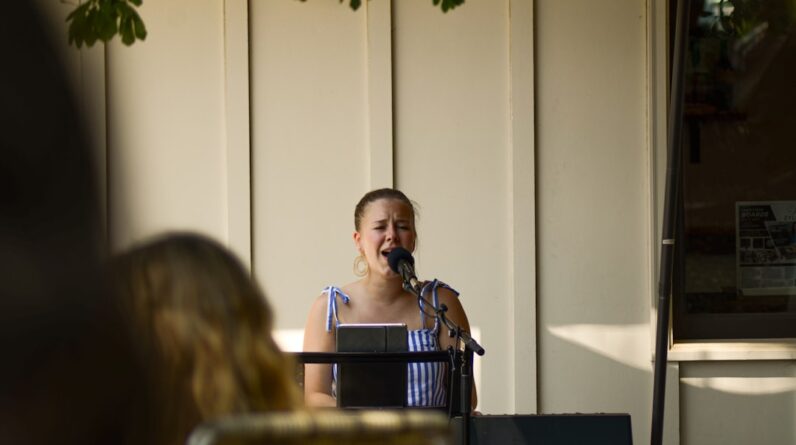
You’ve heard it. That stirring melody that makes you want to hum along. The powerful vocal performance that sends shivers down your spine. Maybe it’s a childhood lullaby, a chart-topping hit, or a classic aria. Whatever the sound, it sparks something within you – a desire to create your own. You’re considering taking private singing lessons in Round Rock, TX, and you’re looking for a music school to guide you. This isn’t about becoming a global sensation overnight; it’s about the personal journey of vocal discovery, refinement, and expression.
The pursuit of learning to sing is a significant undertaking. It requires dedication, practice, and the right guidance. For many, the idea of private lessons conjures images of rigorous technical drills and demanding instructors. While a solid technical foundation is crucial, a good music school in Round Rock will also emphasize the joy and individuality inherent in your vocal development. This guide aims to provide you with a clear understanding of what to expect, the benefits you can anticipate, and how to make the most of your private singing lesson experience right here in Round Rock, Texas.
You might be asking yourself: is now the right time? Do I have what it takes? The answer, for most, is a resounding yes. Age, prior experience, and perceived natural talent are often less important than your willingness to learn and your commitment to the process. A professional music school understands this and tailors its instruction to meet you where you are.
Understanding the Private Singing Lesson Experience
When you enroll in private singing lessons at a music school in Round Rock, you’re entering a structured yet personalized learning environment. This isn’t a one-size-fits-all class. Instead, your lessons are designed to directly address your unique vocal needs, goals, and learning style.
The Initial Consultation and Assessment
Before the first official lesson, many music schools offer an initial consultation. This is your opportunity to discuss your aspirations. Perhaps you want to sing in your church choir, join a local band, improve your range for karaoke, or simply unlock the satisfaction of producing a clear, resonant tone. The instructor will likely listen to you sing a few notes or a short song to get a baseline understanding of your current vocal capabilities.
What to Expect During the Consultation:
- Your Goals Discussion: Be prepared to articulate what you hope to achieve. The more specific you are, the better the instructor can assist you.
- Vocal Observation: You’ll likely be asked to perform basic vocal exercises – scales, sustained notes – to allow the instructor to assess your pitch, breath control, and vocal quality.
- Curriculum Overview: The instructor will explain their teaching philosophy and the general approach they take with their students.
- Q&A: This is your chance to ask about the instructor’s background, their experience with students at your level, and any logistical questions about scheduling and lesson structure.
Tailored Curriculum Development
Based on the initial assessment, your instructor will begin to develop a personalized curriculum. This means the exercises, repertoire, and focus areas will be specifically chosen for you. There’s no predetermined syllabus that every beginner must follow.
Key Components of a Tailored Curriculum:
- Vocal Technique Fundamentals: This forms the bedrock of good singing. It includes proper breathing, posture, resonance, articulation, and vocal placement.
- Repertoire Selection: The songs you learn will be chosen to suit your vocal range, current skill level, and personal interests. This is crucial for motivation and progress.
- Ear Training and Pitch Accuracy: Developing your ability to hear and reproduce pitches accurately is a fundamental skill that will be addressed.
- Musicality and Interpretation: Beyond simply hitting the right notes, you’ll learn about phrasing, dynamics, and conveying emotion through your singing.
- Performance Skills (Optional): If your goal involves performing, lessons can include strategies for managing stage fright, connecting with an audience, and stage presence.
The Lesson Structure Itself
A typical private singing lesson will involve a combination of elements, all aimed at your vocal development.
Typical Lesson Flow:
- Warm-up: Every lesson begins with vocal warm-ups. These exercises prepare your vocal cords for singing, much like an athlete stretches before a workout. This might involve gentle humming, lip trills, sirening up and down scales, and articulation exercises.
- Technical Exercises: Building on the warm-up, specific exercises will be introduced to target areas like breath support, vocal agility, range expansion, and tone production.
- Repertoire Work: You’ll work on specific songs chosen for your lessons. This will involve breaking down the song, practicing challenging passages, and focusing on musicality and expression.
- Review and Practice Strategies: The instructor will often review concepts from previous lessons and provide you with actionable practice strategies to implement between lessons.
- Cool-down: Similar to the warm-up, a brief cool-down can help your vocal cords relax after singing.
Benefits of Private Instruction for Your Voice
The decision to invest in private singing lessons in Round Rock, TX, extends beyond merely learning to sing. It’s an investment in your personal growth, confidence, and well-being.
Developing a Strong Vocal Technique
A skilled instructor provides the critical feedback and guidance needed to build a healthy and sustainable singing voice. This is not something easily achieved through self-teaching or group classes.
Specific Technical Gains:
- Improved Breath Control: Learning to use your diaphragm effectively is paramount for sustaining notes, projecting your voice, and avoiding strain.
- Expanded Vocal Range: With proper technique, you can safely extend your upper and lower vocal limits.
- Enhanced Vocal Tone and Quality: You can learn to produce a richer, more resonant, and clearer sound.
- Greater Vocal Stamina: Proper technique reduces fatigue, allowing you to sing for longer periods without discomfort.
- Precise Pitch Control: Developing your ear and vocal coordination leads to more accurate intonation.
Building Confidence and Self-Expression
Singing is an inherently vulnerable act. Learning to do it well, with support, can be incredibly empowering.
Confidence-Building Aspects:
- Overcoming Performance Anxiety: Practical strategies and experience in a supportive environment can significantly reduce stage fright.
- Self-Discovery Through Music: Exploring different genres and emotional expressions through song can be a profound journey of self-understanding.
- Achieving Personal Milestones: As you master new songs and vocal techniques, you build a sense of accomplishment and self-efficacy.
- Vocal Confidence in Daily Life: Improved vocal projection and articulation can translate to greater confidence in communication beyond singing.
Personalized Learning and Motivation
The one-on-one nature of private lessons ensures that your learning is directed and your motivation is sustained.
The Power of Personalization:
- Addressing Individual Strengths and Weaknesses: The instructor focuses solely on your needs, accelerating your progress in areas where you excel and providing targeted support where you struggle.
- Learning at Your Own Pace: There’s no pressure to keep up with or wait for a group’s progress. Your lessons move at a rhythm that suits you.
- Keeping You Engaged: When you’re learning songs you love and seeing tangible results, your desire to practice and improve naturally increases.
- Accountability: Knowing you have a lesson coming up provides a consistent motivator to practice between sessions.
Finding the Right Music School in Round Rock, TX
Selecting a music school is a crucial step. You’re looking for a place that not only offers quality instruction but also provides a welcoming and conducive learning environment.
Key Factors to Consider When Choosing a School
When you’re researching music schools in Round Rock, delve deeper than just the services offered.
Essential Considerations:
- Instructor Qualifications and Experience: Look for instructors with relevant musical education, performance experience, and a proven track record of teaching. Don’t hesitate to ask about their background.
- Teaching Philosophy: Does their approach align with your learning style and goals? Are they patient, encouraging, and knowledgeable?
- Student Testimonials and Reviews: What do other students say about their experiences at the school? Online reviews and testimonials can offer valuable insights.
- Lesson Structure and Frequency: Clarify the duration of lessons, how often they are offered, and what the cancellation policy entails.
- Practice Facilities and Resources: Does the school offer practice rooms? Are there opportunities for performance or ensemble work if that interests you?
- Cost and Value: While budget is a consideration, focus on the value you’ll receive for your investment. Compare pricing structures and what’s included.
Understanding Different Lesson Formats
While private lessons are central, music schools may offer other avenues for growth.
Exploring Various Learning Avenues:
- Private Vocal Coaching: This is the core offering. Your dedicated instructor focuses exclusively on your vocal development.
- Group Vocal Workshops: Some schools offer occasional workshops on specific topics like harmony, vocal health, or performance. These can be supplementary to private lessons.
- Performance Opportunities: Seek out schools that provide recitals, open mic nights, or other venues for you to practice performing in front of an audience.
- Music Theory Classes: Understanding music theory can significantly enhance your singing. Some schools offer integrated theory instruction or separate classes.
The Importance of a Good Instructor-Student Relationship
The dynamic between you and your instructor is paramount to your success and enjoyment.
Nurturing the Relationship:
- Open Communication: Feel comfortable discussing your progress, challenges, and any concerns you have with your instructor.
- Mutual Respect: A positive relationship is built on respect for each other’s time, expertise, and effort.
- Encouragement and Support: Your instructor should be a source of encouragement, celebrating your successes and helping you navigate difficulties.
- Guidance, Not Dictation: A good instructor guides you toward developing your own understanding and vocal intuition, rather than simply dictating what to do.
What to Expect in Your First Few Months of Lessons
The initial phase of learning to sing is about establishing a solid foundation and building momentum. It’s a period of exploration and growth.
Establishing Foundational Skills
Your first few months will likely focus on the fundamental building blocks of good singing. Don’t expect to be singing complex opera arias immediately.
Key Areas of Focus:
- Posture and Alignment: Learning to stand or sit in a way that optimizes breath support and vocal production.
- Breath Management Techniques: Understanding and practicing diaphragmatic breathing is a primary goal.
- Basic Vocalizations: This includes gentle humming, lip trills, and simple scale exercises to explore your vocal range and resonance without strain.
- Introduction to Pitch Matching: Exercises designed to improve your ability to hear and accurately reproduce musical pitches.
- Vocal Health Awareness: Learning about proper vocal care to prevent strain and injury.
Gradually Expanding Your Repertoire
As your technique develops, your instructor will begin to introduce songs that are appropriate for your current skill level and interests.
Repertoire Progression:
- Simple Melodies and Rhythms: Initial song choices will likely have straightforward melodic lines and rhythmic patterns.
- Focus on Specific Techniques: You might work on a song that helps you practice a particular breathing technique or vocal coloring.
- Introduction to Different Styles: Your instructor may introduce you to various musical genres to broaden your understanding and vocal application.
- Learning to Read Basic Music: If you don’t already, you might start learning to read simple melodies and rhythm notation.
Setting Realistic Goals and Monitoring Progress
Consistent progress is key to staying motivated. Your instructor will help you set achievable goals.
Goal Setting and Progress Tracking:
- Short-Term Goals: These might be mastering a particular scale, singing a chorus without a breath shortage, or accurately hitting a specific note.
- Long-Term Goals: These are broader aspirations, such as preparing for a performance or extending your range by a half-step.
- Regular Assessments: Your instructor will periodically assess your progress, not just through formal evaluations but through observation during lessons.
- Self-Reflection: As you gain experience, you’ll start to develop your own ability to recognize areas for improvement.
Practicing Effectively Between Lessons
The real magic of private singing lessons in Round Rock, TX, happens outside of your scheduled time. Consistent and focused practice is what solidifies your learning.
Developing a Practice Routine
Consistency over intensity is often the most effective approach when it comes to vocal practice.
Building Your Routine:
- Schedule Dedicated Practice Time: Treat your practice sessions with the same importance as your lessons. Even 15-20 minutes of focused practice most days can yield significant results.
- Break Down Practice Sessions: Don’t try to do everything at once. Dedicate segments of your practice to warm-ups, technical exercises, and repertoire work.
- Listen Critically to Yourself: Record your practice sessions and listen back. This can be an eye-opening experience and help you identify areas that need attention.
- Practice in Different Environments: Once you’re comfortable, try practicing in various settings to build confidence and adaptability.
Effective Practice Techniques
Simply going through the motions won’t lead to the best results. Employ mindful practice strategies.
Smart Practice Approaches:
- Focus on the Fundamentals: Always return to your warm-ups and technical exercises. They are the foundation for everything you do.
- Isolate Difficult Passages: Don’t just sing a song from beginning to end. Identify the parts that are challenging and work on them slowly and deliberately.
- Use a Metronome: This is essential for developing a steady sense of rhythm and tempo, especially when learning new songs.
- Sing with Expression, Not Just Notes: Even during technical exercises, try to imbue your singing with intention and musicality.
- Vocal Rest: Listen to your body. If your voice feels tired or strained, take a break. Hydration is also crucial.
Overcoming Practice Plateaus
It’s natural to hit periods where you feel like you’re not making progress. These plateaus are part of the learning process.
Navigating Plateaus:
- Communicate with Your Instructor: A good instructor can offer new approaches, exercises, or repertoire to help you break through a plateau.
- Vary Your Practice: Try a different approach to your practice routine. Spend more time on technique, or focus on a song in a different style.
- Step Away: Sometimes, taking a short break from focused practice can be beneficial. Your subconscious mind can continue to process what you’ve learned.
- Revisit Earlier Material: Sometimes, going back to simpler exercises or songs can reinforce foundational skills and build confidence.
- Focus on the Journey: Remind yourself why you started learning to sing in the first place. Celebrate the progress you’ve already made.
Conclusion: Your Vocal Journey Begins in Round Rock
Embarking on private singing lessons in Round Rock, TX, is a commitment to personal growth, artistic exploration, and the sheer joy of making music. It’s about unlocking a part of yourself that may have been dormant, or refining a talent you’ve already begun to cultivate. A reputable music school in Round Rock offers the structure, expertise, and personalized attention necessary to guide you through this enriching experience.
You are not merely learning to produce sounds; you are learning to communicate emotion, to express yourself, and to connect with others through the universal language of music. The journey will have its challenges, but with dedication and the right guidance, you will discover the incredible potential of your own voice. Your vocal odyssey starts with a single step, and a qualified instructor at a local music school is ready to help you take it.
FAQs
What are private singing lessons?
Private singing lessons are one-on-one sessions with a vocal coach or instructor, where students receive personalized instruction and feedback on their singing technique, performance skills, and overall vocal development.
What can I expect from private singing lessons at a music school in Round Rock, TX?
At a music school in Round Rock, TX, private singing lessons typically include personalized vocal exercises, repertoire selection, performance preparation, and music theory instruction. Students can expect individualized attention and guidance tailored to their specific goals and skill level.
Who can benefit from private singing lessons?
Private singing lessons are beneficial for individuals of all ages and skill levels, including beginners looking to develop their vocal technique, intermediate singers seeking to improve their performance skills, and advanced vocalists preparing for auditions or performances.
How long are private singing lessons typically at a music school in Round Rock, TX?
Private singing lessons at a music school in Round Rock, TX typically range from 30 minutes to 1 hour, depending on the student’s age, experience, and goals. Longer sessions may be available for advanced students or those preparing for specific performances or auditions.
What are the benefits of taking private singing lessons at a music school in Round Rock, TX?
The benefits of taking private singing lessons at a music school in Round Rock, TX include personalized instruction, individualized feedback, performance opportunities, access to professional facilities and resources, and the opportunity to develop a strong foundation in vocal technique and musicianship.